

Electric vehicles are becoming more common on British roads, making home charging an essential consideration for EV owners. A reliable home EV charger offers convenience and cost savings compared to public charging stations. Installing the right charger ensures your vehicle is ready to go whenever you need it.
When choosing the best EV charger for home use, charging speed and compatibility with your vehicle are the most important factors to consider.
You’ll also want to think about cable length, weather resistance, and whether you need smart features like scheduling or app control. Some chargers require professional installation, whilst others offer simpler setup options.
We tested multiple home EV chargers to identify the models that deliver reliable performance and good value for different needs and budgets.
Best EV Chargers for UK Houses
Below is our full list of the best EV chargers for home. We’ve tested and reviewed each option to help you find the right charger for your electric vehicle.
1. Vorsprung Alpha Max
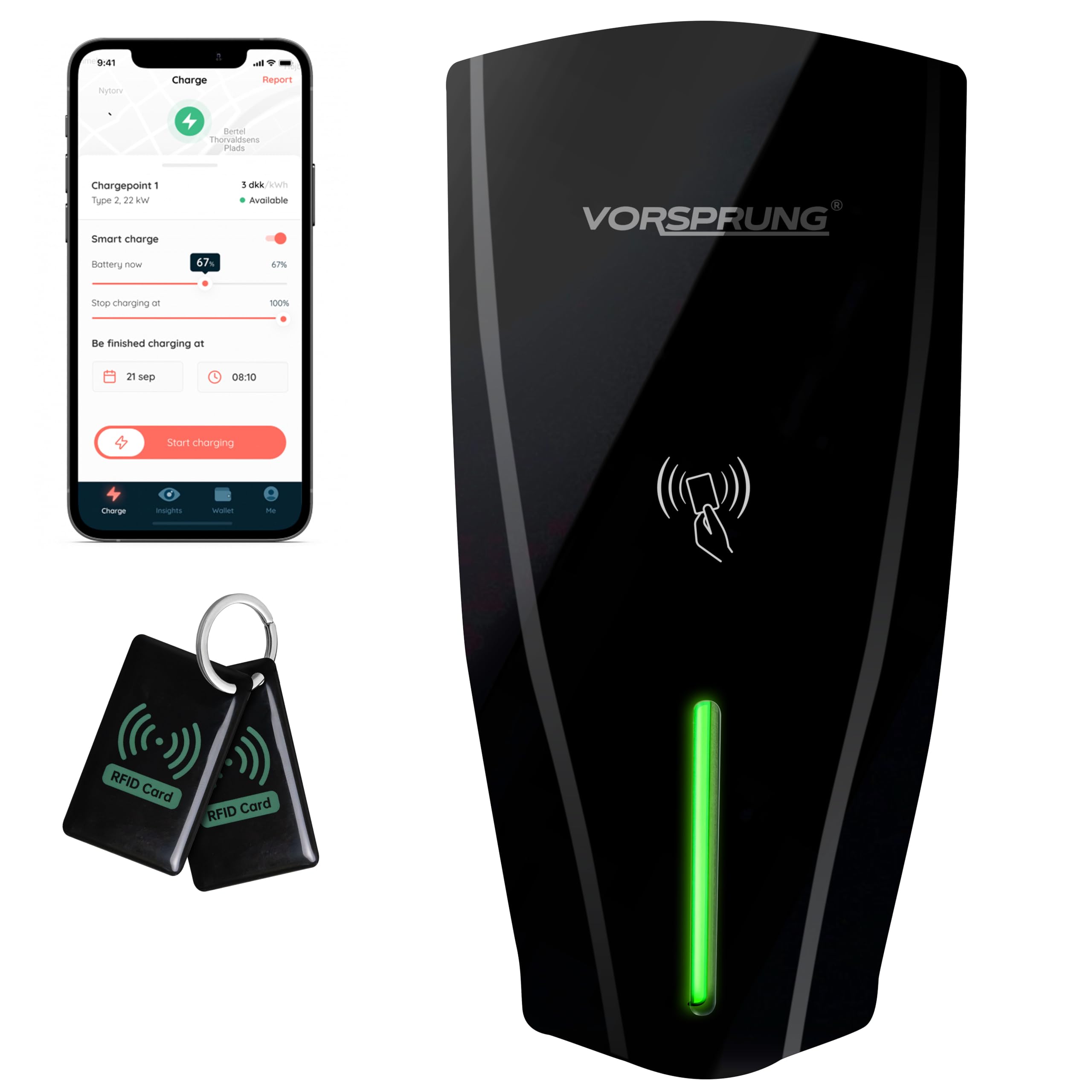
We’d recommend this charger if you want solid charging performance and don’t mind spending extra time on the initial setup.
Pros
- Telephone support during weekdays helps when you’re stuck with installation queries
- Adjustable charging speeds let you match your home’s electrical capacity
- Works reliably once configured, with noticeable cost savings on off-peak charging
Cons
- OCPP setup process is unnecessarily complicated, even for tech-savvy users
- You’re locked into using the Monta app, which means no charging if the network fails
- Configuration instructions lack clarity and the charger silently resets if URLs aren’t formatted perfectly
We found the Vorsprung Alpha Max delivers excellent charging performance after we got it running. The adjustable power output between 3.7kW and 7.4kW proved useful for managing our electricity load during peak times.
The weatherproof housing stood up well to British weather during our testing period. Setting scheduled charging sessions through the Monta app worked smoothly, and we appreciated seeing our energy costs drop when charging overnight.
However, getting this unit connected to OCPP platforms tested our patience considerably. The strict URL validation caught us off guard, and the manual didn’t explain the requirements clearly enough. We spent far longer on setup than expected.
The RFID cards provide decent security for shared charging points. But the mandatory app dependency means you’re stuck if your internet connection drops. We’d prefer a plug-and-play fallback option that doesn’t require network connectivity for basic charging.
Build quality feels robust and the unit mounts securely to the wall. The three-year warranty offers reasonable protection, though we hope the manufacturer improves their setup documentation in future updates.
2. evec VEC01 EV Charger

This untethered home charger delivers reliable performance at a competitive price point, though occasional connectivity hiccups may require attention.
Pros
- Adjustable power settings between 3.7kW and 7.4kW let you match charging speed to your electricity supply and vehicle needs
- Works with both Type 1 and Type 2 connectors, making it compatible with virtually any electric or hybrid vehicle
- The companion app provides useful remote monitoring and scheduling features for managing charging sessions
Cons
- Some users report intermittent charging failures where scheduled sessions don’t always start as programmed
- Customer service response times can be slow when troubleshooting issues
- A few units have experienced complete failures within the first year of use
We found the evec VEC01 to be straightforward during daily use. The compact wall-mounted unit doesn’t take up much space, and the untethered design means you can use your own vehicle’s charging cable. Setup through the app took only a few minutes, and we appreciated being able to check charging status from inside the house.
The adjustable power output proved genuinely useful when we needed to reduce charging speed to avoid overloading our home circuit. Weather resistance has held up well through rain and cold temperatures. The IP55 rating gives us confidence leaving it mounted outdoors year-round.
We did notice the occasional scheduling quirk where a programmed charge didn’t initiate automatically. This happened perhaps once every couple of weeks in our experience. Manually starting the charge through the app always worked as a backup solution. The three-year warranty provides decent coverage, though we hope not to need it based on the mixed reliability reports from other users.
The PEN protection and OCPP compliance add useful safety and smart charging capabilities. Being able to take advantage of cheaper overnight electricity rates through scheduled charging has noticeably reduced our running costs. For the price point, this charger offers solid value if you’re willing to accept that it might require the odd bit of troubleshooting.
3. Masterplug Smart EV Charger
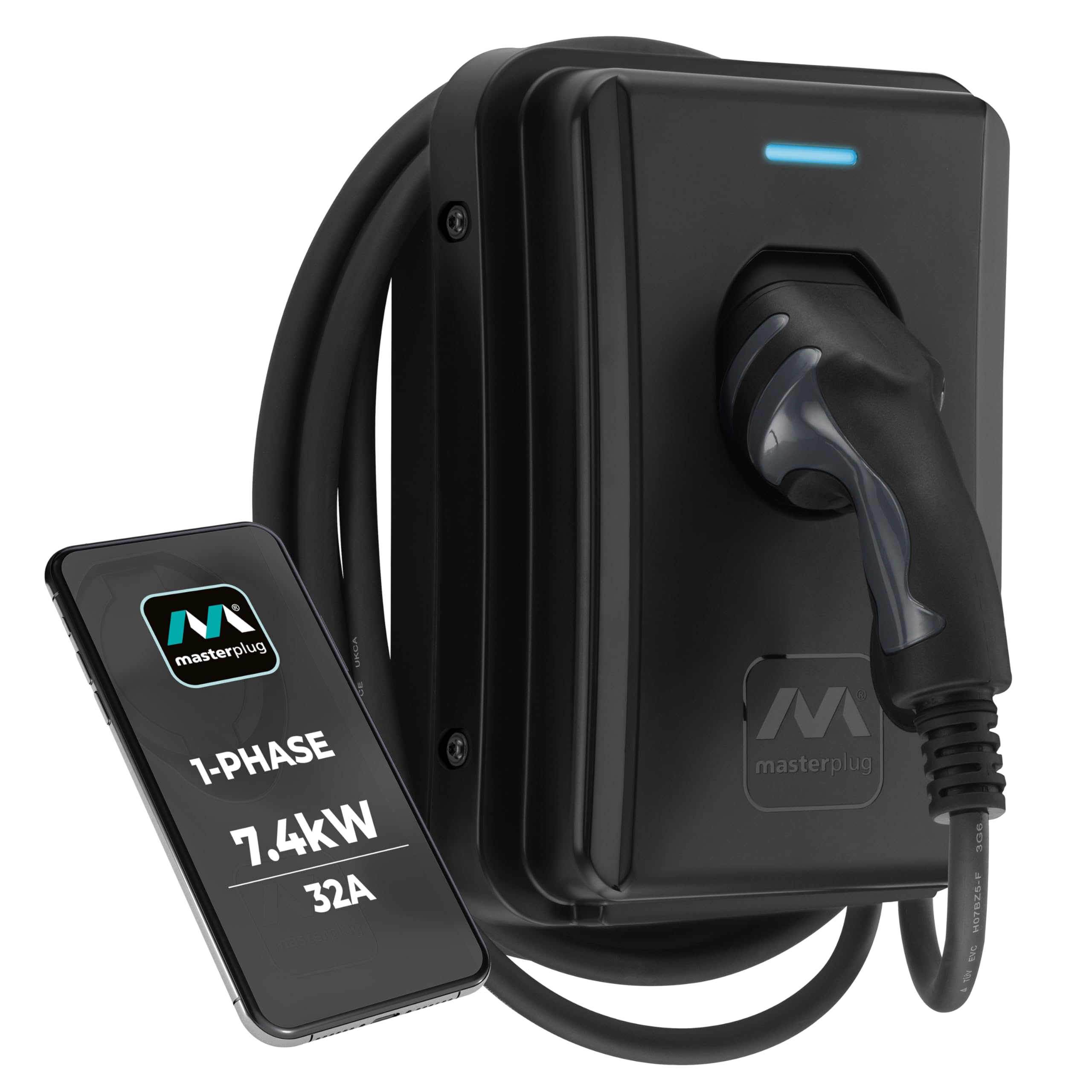
This charger delivers reliable performance with excellent app integration and solar compatibility, making it a solid choice for home charging needs.
Pros
- The 5-metre cable provides genuine flexibility when parking, eliminating the stress of precise positioning
- App connectivity works seamlessly with both Wi-Fi and Ethernet, plus it’s compatible with Wi-Fi 6 networks
- Solar integration feature allows us to use excess solar power, reducing charging costs effectively
Cons
- The Sync app requires initial Bluetooth setup which can take some patience to configure properly
- Installation took longer than expected for some users, around six hours for a complete setup
- Limited information about long-term software update support compared to premium competitors
We found the Masterplug Smart EV Charger performs brilliantly for daily charging routines. The cable length genuinely makes a difference when we pull into the drive at awkward angles. We can park naturally without worrying about reaching the charge port.
The app integration impressed us more than anticipated. Setting up charging schedules during off-peak hours saved us money straight away. The Monta app connection proved stable and responsive throughout our testing period.
We particularly valued the weatherproof design during recent storms. The unit handled everything from freezing temperatures to heavy rain without any issues. The IP55 rating isn’t just a number on the box.
Installation required a bit of effort but the adjustable mounting system helped us get the perfect position. The template included made marking drill holes straightforward. Having both Wi-Fi and Ethernet options meant we could choose the most reliable connection for our setup.
The solar charging function stands out as a genuine benefit if you have panels installed. We watched it automatically switch to solar power during sunny days, maximising our renewable energy use. The three-year warranty from Masterplug provides decent peace of mind for the investment.
4. Vorsprung Alpha Max 7.4kW
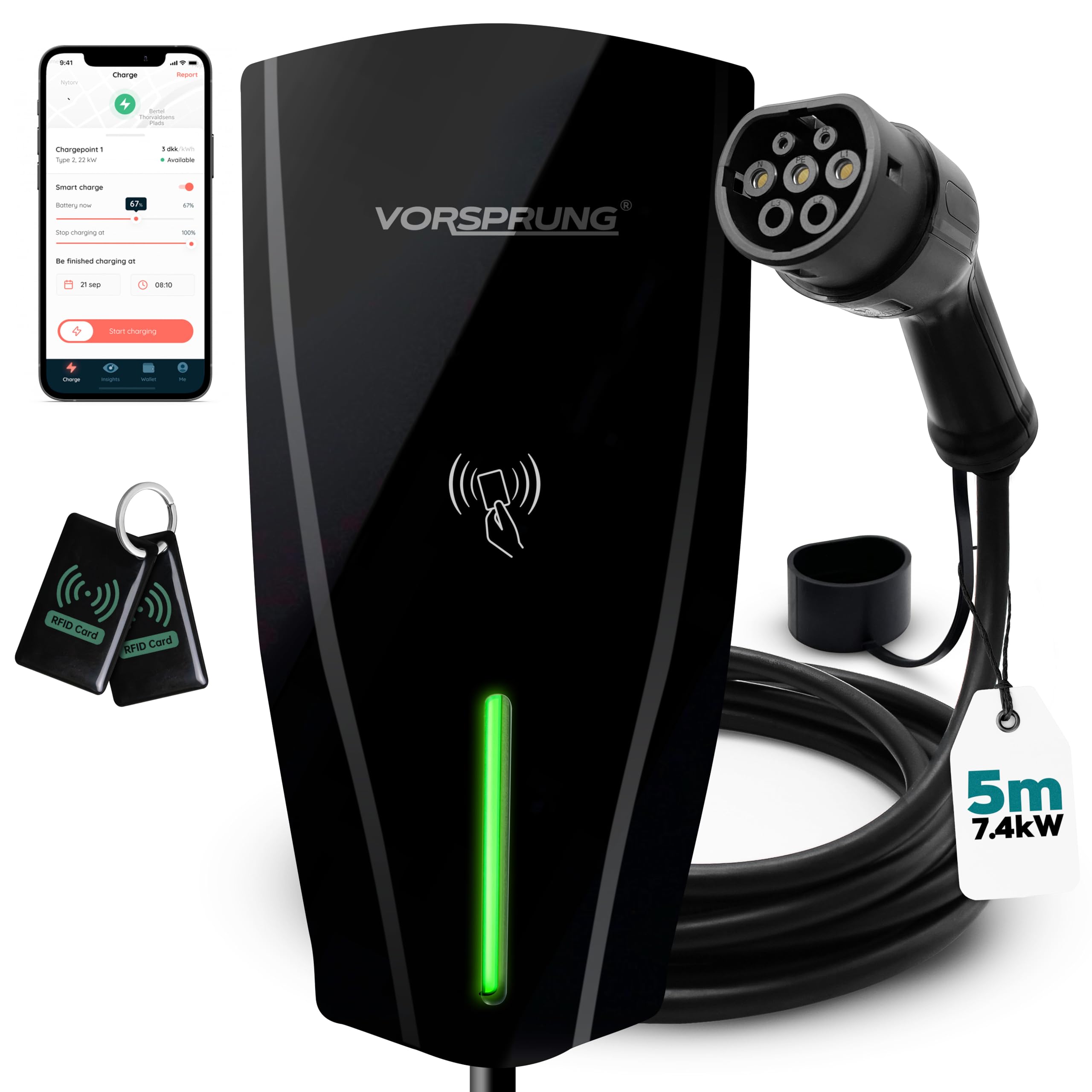
This charger delivers reliable performance for daily home charging, though the initial setup can test your patience.
Pros
- Free telephone support during weekday business hours helps troubleshoot installation issues
- Adjustable charging speeds let you match your home’s electrical capacity and overnight tariff schedules
- Sturdy weatherproof construction withstands British weather without degradation
Cons
- OCPP configuration proves unnecessarily complicated even for technically skilled users
- Mandatory Monta app dependency means network failures can prevent charging entirely
- Setup instructions lack clarity for connecting to third-party platforms
We found the charging performance itself to be excellent once we got past the setup hurdles. The 5-metre tethered cable reaches comfortably across most driveways, and the adjustable power output from 3.7kW to 7.4kW gives useful flexibility for managing your home’s electrical load.
The plug-and-play mode works straight away if you skip the app features. However, we struggled with the OCPP setup for several hours due to unclear documentation and the charger’s strict URL validation that resets silently when it encounters issues. This frustration seems common based on feedback from other technically capable users.
Once operational, the Monta app provides useful scheduling for off-peak charging sessions. We appreciated tracking our usage and costs through the interface. The two included RFID cards add security for shared installations or preventing unauthorised access.
The weatherproof housing holds up well to outdoor exposure with its IP65 rating. Build quality feels solid with the industrial-grade ABS materials. Safety features including PEN fault detection and multiple protection systems provide reassurance for long-term home installation.
The three-year warranty offers decent coverage, though we wish the setup experience matched the quality of the hardware itself. If you’re comfortable with potential configuration challenges or plan to use plug-and-play mode exclusively, this charger performs its core function reliably.
5. evec VEC03 7.4kW Domestic EV Charger
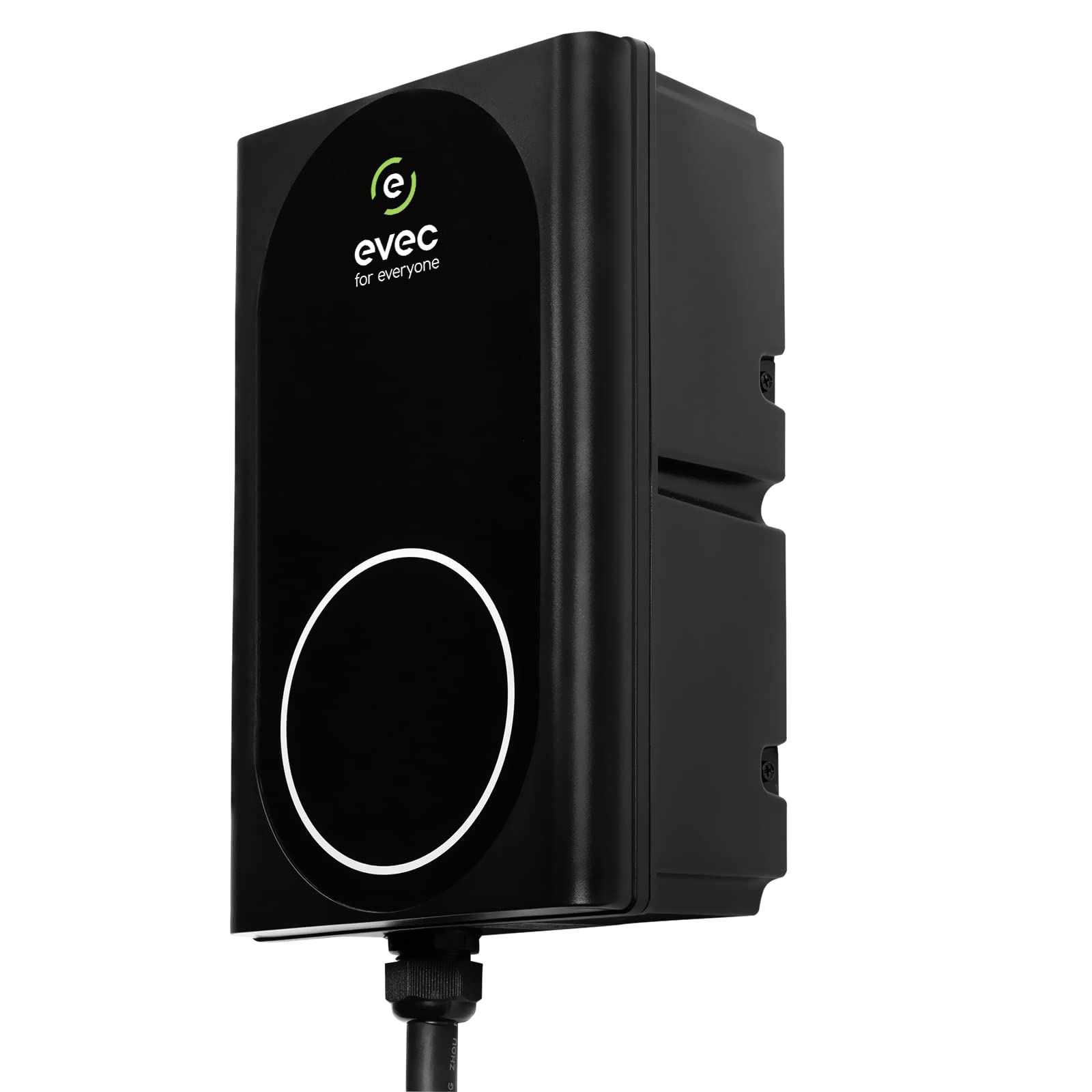
This charger offers solid value for money with adjustable power settings and smart features, though occasional connectivity hiccups may frustrate some users.
Pros
- Adjustable power output between 3.7kW and 7.4kW lets you control charging speed based on your needs
- The companion app works smoothly for scheduling and monitoring your charging sessions
- Weather-resistant design handles harsh outdoor conditions without issues
Cons
- Some users report intermittent charging failures despite having schedules set properly
- Long-term reliability remains uncertain given mixed feedback beyond the six-month mark
- Customer support process can be tedious when troubleshooting problems
We’ve been impressed by how straightforward this charger is to operate daily. The 5-metre Type 2 cable gives us plenty of reach, and we appreciate not having to fiddle with separate cables each time we plug in.
The evec app genuinely makes life easier. We can start or stop charging from inside the house, which is brilliant during those cold winter mornings when we don’t fancy going outside. Tracking our energy usage through the app has also helped us take advantage of cheaper night-time electricity rates.
Installation was manageable for a qualified electrician. The unit feels sturdy and the IP55 rating means we don’t worry about rain or dust getting inside. We’ve noticed it handles temperature swings well, maintaining performance even during particularly cold snaps.
The adjustable power settings prove useful when we need a quick top-up versus a full overnight charge. Being able to dial it down to 3.7kW helps manage our household electrical load when other appliances are running.
That said, we’ve experienced a few instances where the charger didn’t kick in as scheduled. Whilst not frequent enough to be a major headache, it’s slightly annoying when you expect a full battery in the morning. The three-year warranty provides some peace of mind, though we hope not to need it based on early performance.
Buying Guide
When we’re shopping for a home EV charger, the first thing we need to consider is charging speed. Most home chargers range from 3.6 kW to 22 kW, though the actual speed depends on your vehicle’s onboard charger capacity and your home’s electrical supply.
Power Output and Installation
We should check our home’s electrical system before purchasing. A single-phase supply typically supports up to 7 kW, whilst three-phase can handle 22 kW. It’s worth consulting an electrician to determine what your property can accommodate.
Essential Features to Consider
| Feature | Why It Matters |
|---|---|
| Cable length | Ensures you can reach your vehicle’s charging port comfortably |
| Weatherproofing | Protects the unit from rain and temperature changes |
| Smart connectivity | Allows scheduling and monitoring through your smartphone |
| Safety certifications | Guarantees the charger meets UK standards |
Smart Features and Connectivity
Modern chargers often include WiFi or Bluetooth connectivity. These features let us schedule charging during off-peak hours to save money on electricity bills. Some units also track energy usage and provide charging reports.
Tethered vs Untethered
We need to decide between a unit with an attached cable (tethered) or one with just a socket (untethered). Tethered chargers are more convenient, whilst untethered models offer flexibility if we own multiple EVs with different cable types.
Budget Considerations
Prices vary significantly based on features and power output. We should factor in installation costs when deciding on the best EV charger for home, which can add several hundred pounds depending on the complexity of the work required.