

A log burner provides efficient heating whilst creating a cosy atmosphere in your home.
Choosing the best wood for log burner use directly impacts heat output, burn time, and the amount of creosote buildup in your chimney.
Hardwoods and softwoods each offer distinct advantages depending on your heating needs and circumstances.
The moisture content of your firewood matters as much as the species you select. Seasoned wood with less than 20% moisture content burns cleaner and produces more heat than freshly cut timber. Dense hardwoods like oak and ash generate longer-lasting fires, whilst lighter softwoods such as pine ignite quickly for kindling.
We tested various wood types to identify which ones deliver the best performance for different burning situations.
1. GardenCo Hardwood Kiln Dried Logs
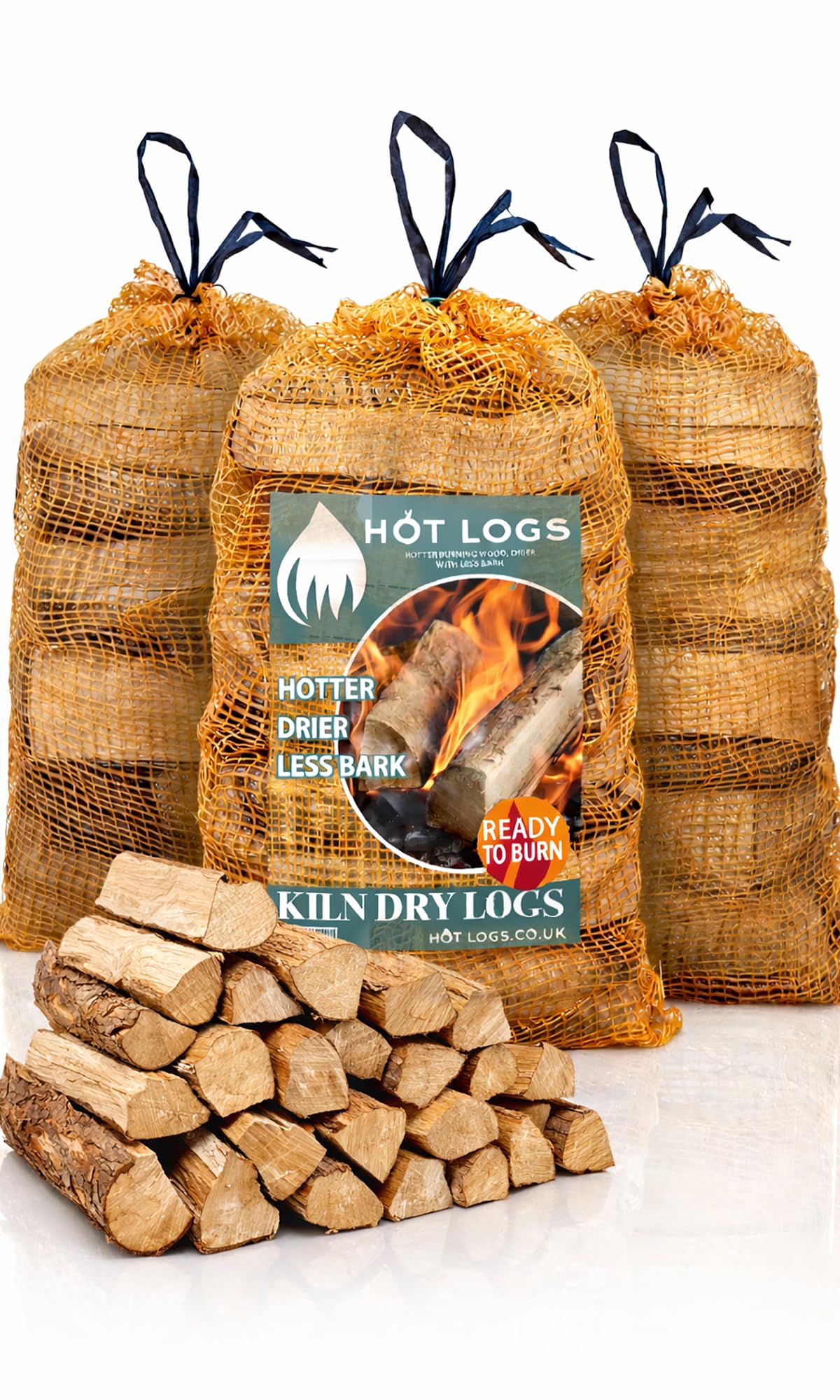
These kiln dried hardwood logs deliver reliable heat output and clean burning performance, making them a solid choice for regular wood burner users who prioritise efficiency.
Pros
- Burns significantly hotter and longer than softwood alternatives with minimal smoke production
- Ready to Burn certified with under 10% moisture content for immediate use
- Sustainably sourced from managed woodlands with recyclable packaging
Cons
- Higher price point compared to standard firewood options
- Occasional softwood pieces mixed in with the hardwood logs
- Some users reported inconsistent burning performance
We found these logs incredibly easy to work with straight out of the box. The low moisture content means they caught quickly with just a handful of kindling, and we didn’t have to wait around for the fire to get going properly.
The heat output impressed us during extended evening burns. A single log split in half kept our burner running hot for well over an hour, which is exactly what we need on cold winter nights. The minimal bark also meant less mess around the hearth area.
We appreciated the consistent sizing across all three 25L nets. Each log felt substantial and well-dried, though we did spot a few pieces that looked like they might be softwood rather than pure hardwood. This didn’t drastically affect performance, but it’s worth noting.
The Ready to Burn certification gives us confidence that we’re using compliant fuel. The reduced smoke and particulates make a noticeable difference to how often we need to clean our flue system. The packaging broke down easily for recycling, which aligns with our preference for environmentally responsible products.
2. Warma Hardwood Firewood Logs

These kiln-dried hardwood logs deliver reliable heat for weekend fires, though the price point sits higher than many alternatives.
Pros
- Burns consistently with excellent heat output that lasts through an evening
- Arrives properly dried at below 20% moisture content so it ignites quickly
- Convenient netting makes storage and handling straightforward
Cons
- Costs notably more than comparable suppliers in the market
- Log sizes vary considerably within each net
- Weight fluctuates between batches due to moisture variations
We found these logs lit easily without fuss, which made getting our fire going pleasantly quick on a cold evening. The heat output impressed us once the fire established itself. The flames burned steadily for hours without constant attention.
The mixed hardwood composition delivered a comfortable warmth throughout our living room. We noticed the logs didn’t burn through too rapidly, which meant fewer trips to add fuel. The chunky pieces caught flame well and maintained their structure as they burned.
Each 27-litre net holds approximately 7 to 10 kilograms of wood, though we observed some variation between batches. The packaging occasionally arrives in different boxes than expected. We appreciated that the wood was genuinely ready to burn straight from the net, with no additional drying needed.
The main drawback centres on value for money when compared to other firewood suppliers. While the quality remains solid, we could find similar performance at lower prices elsewhere. Some nets contained mostly smaller pieces rather than the substantial logs we prefer for established fires.
3. Hotlogs Big White Bumper Bag
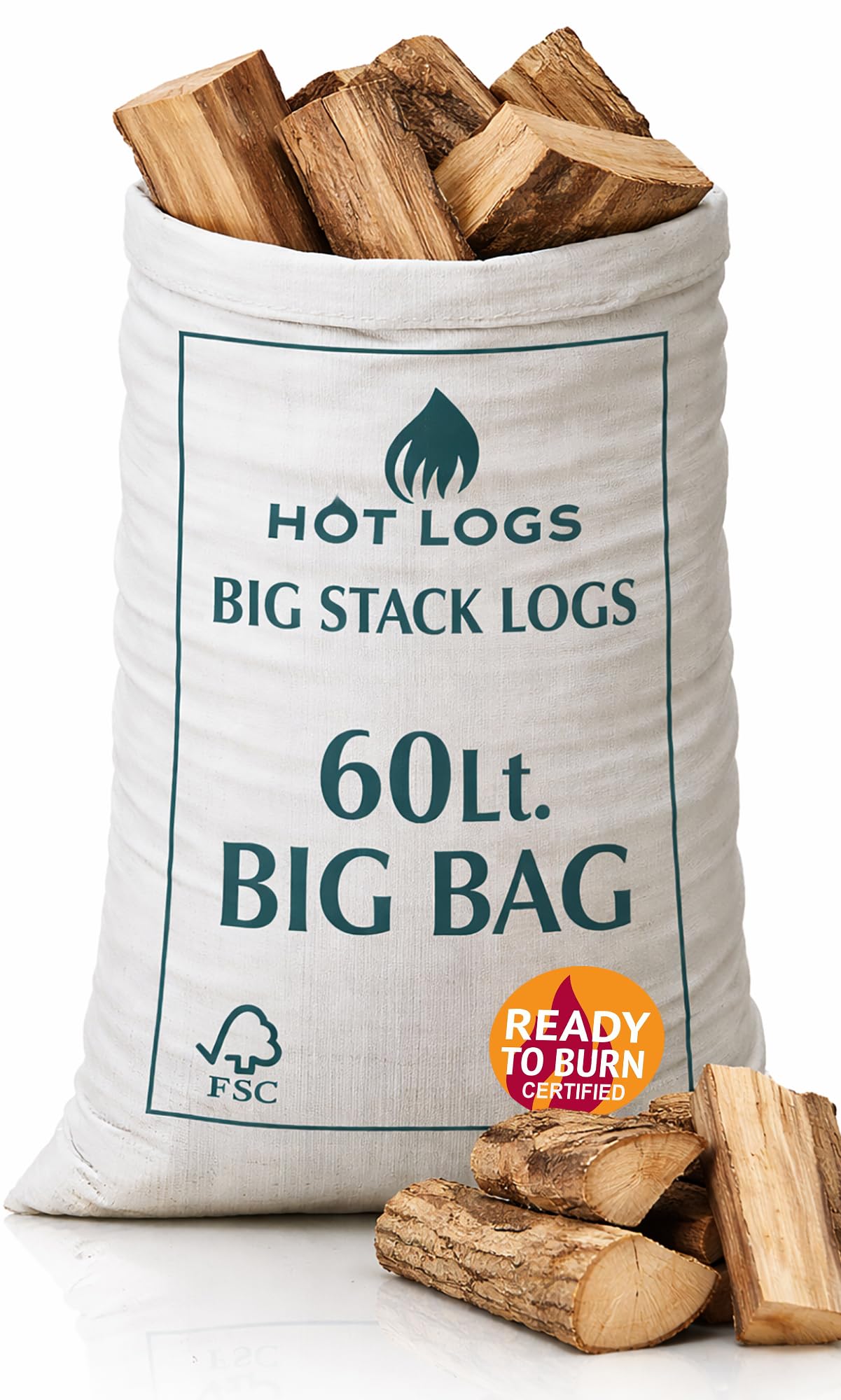
We’d recommend this kiln-dried hardwood if you want reliable heat output without waiting for seasoning, though be prepared for smaller log sizes than you might expect.
Pros
- Catches fire quickly and burns hot with minimal fuss
- Ready to use straight from the bag with moisture content below 15%
- Creates less ash than many alternatives we’ve tried
Cons
- Many pieces are quite small, so you’ll go through them faster
- Bark content means daily glass cleaning is necessary
- Some logs are lighter softwood rather than pure hardwood
We’ve been burning these logs regularly in our wood burner and they deliver solid performance. The heat output impressed us right away. They catch without much effort and maintain a steady flame that warms the room efficiently.
The 60-litre bag looks generous but the log sizes vary considerably. We found ourselves reaching for more pieces throughout the evening because many are smaller than the stated 25cm length. This means a bag doesn’t last quite as long as we initially hoped.
One thing we noticed is the bark creates more residue on the stove glass than other brands. We had to wipe down the door each morning after an evening burn. The logs themselves are properly dried though, which prevents the dangerous creosote buildup that wet wood causes.
The convenience factor is excellent since they’re Ready to Burn certified. We didn’t need to store them for months or worry about moisture levels. Just open the bag and start your fire.
Heat output stays consistent and we appreciated how little ash accumulated in the firebox. Cleaning out the stove became less of a chore. The occasional piece with green moss suggested mixed quality control, but most logs performed well enough for regular use.
4. GardenCo Pini Kay Briquettes
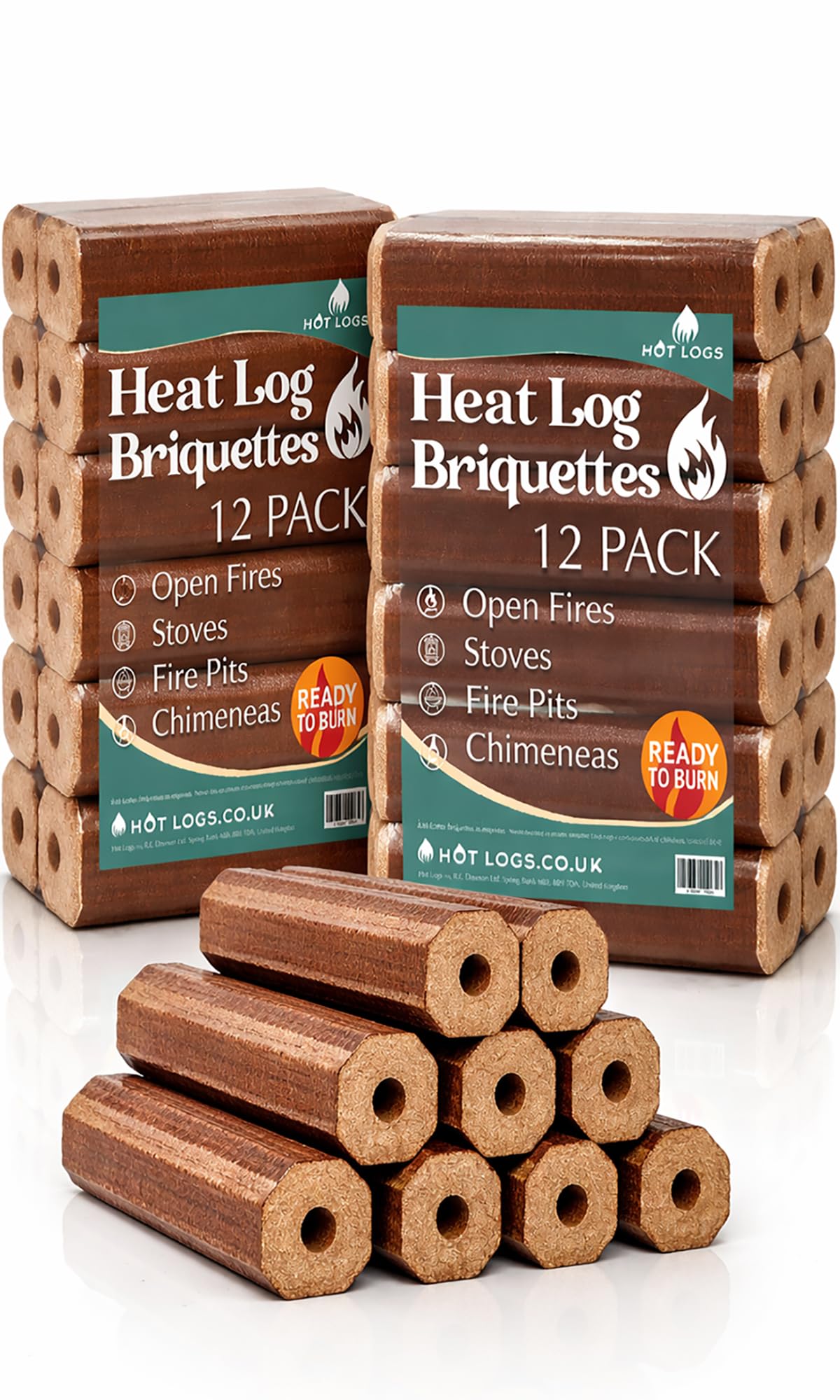
We found these briquettes deliver impressive heat output and maintain their shape throughout burning, making them a solid choice for anyone wanting a reliable, eco-friendly fuel source.
Pros
- Burns significantly hotter than standard logs due to extremely low moisture content
- Produces minimal ash residue, which means far less cleaning up afterwards
- Maintains structural integrity whilst burning without expanding or spitting dangerously
Cons
- Burn duration falls shorter than we initially expected for the price point
- Some packages arrived with black external coating that differs from promotional images
- Individual briquettes burn through fairly quickly when used alone
We’ve been using these GardenCo briquettes regularly throughout winter, and they genuinely throw out remarkable warmth. The heat intensity surpasses traditional seasoned logs, which we attribute to that sub-5% moisture content. When we first lit them, the bright, consistent flame created exactly the cosy atmosphere we wanted.
The shape-retaining feature proved particularly useful in our wood burner. Traditional logs often crumble and create mess, but these stayed intact until they burned down to minimal ash. We appreciated how clean the firebox remained after each burn.
Breaking one briquette in half worked brilliantly as a fire starter when placed over kindling. The compact 200mm size made storage straightforward, and we liked knowing they’re made from recycled wood without chemicals.
However, we noticed the burn time doesn’t quite match premium kiln-dried hardwood logs. Each briquette lasted a decent stretch, but we found ourselves adding fuel more frequently than anticipated. The price remains competitive enough that this trade-off feels acceptable for the heat output delivered.
The packaging quality varied between orders. Whilst most arrived well-protected, one delivery came with briquettes showing that unexpected black coating. They still burned effectively, but the visual inconsistency was noticeable.
5. Simpa Kiln Dried Birch Logs
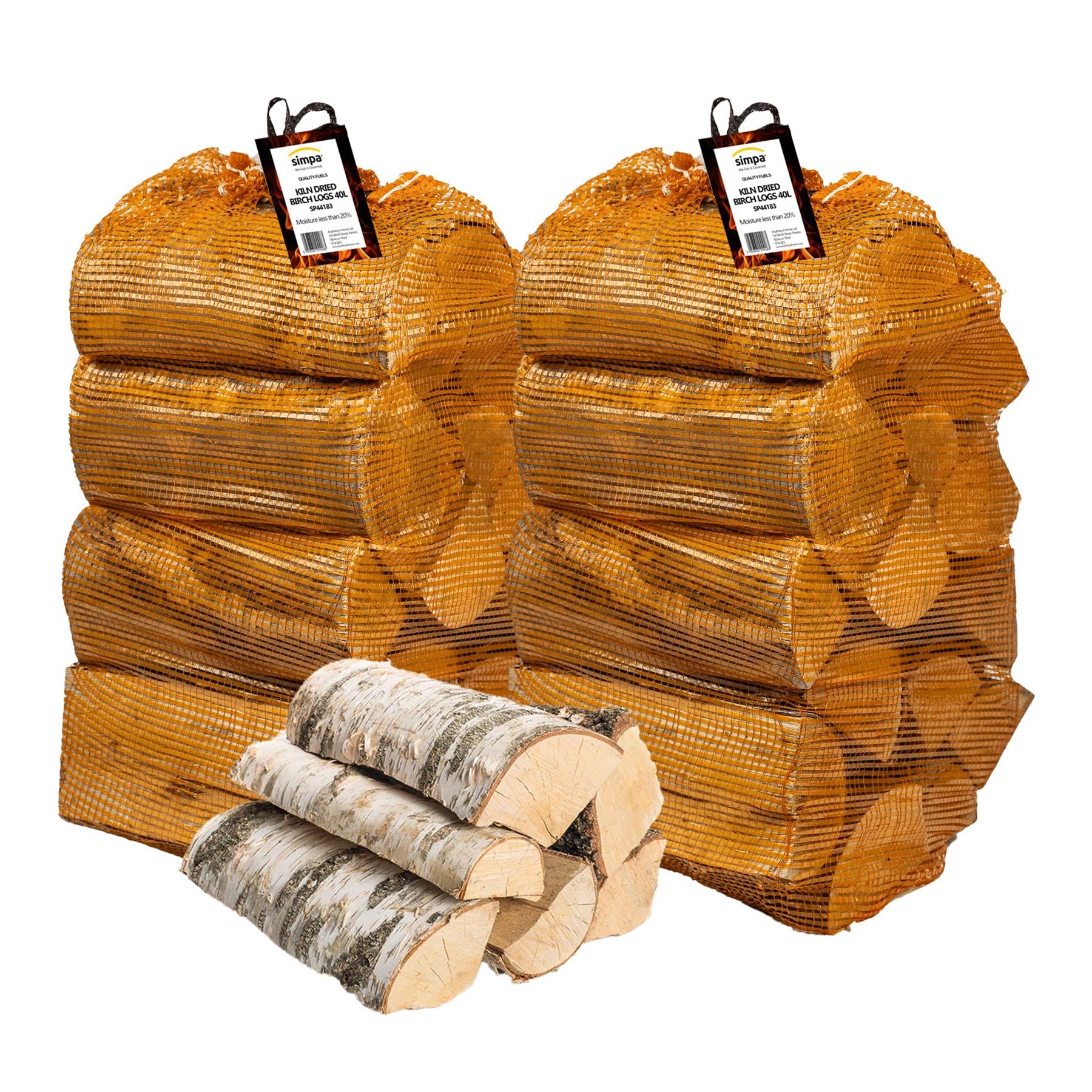
We’d recommend these birch logs if you want reliable heat output and clean burning, though you’ll need to accept some inconsistency in log sizing.
Pros
- Ignites quickly and burns with excellent heat retention for extended periods
- Arrives properly dried with minimal smoke production during burning
- Ready to Burn certification means less hassle with chimney maintenance
Cons
- Log sizes vary dramatically within the same bag
- Some bags contain too many thin slivers that burn through rapidly
- Price per volume is higher compared to some alternatives
We found these birch logs caught fire easily without needing excessive kindling. The flames were strong and consistent throughout the burn, producing impressive heat that warmed our space effectively.
The moisture content was spot on, which meant we didn’t deal with hissing or excessive smoke. When we loaded our log burner in the evening, the coals held their heat well into the night. The wood has a pleasant smell whilst burning that adds to the overall experience.
However, we noticed considerable variation in the log sizes when we opened our bag. Some pieces were proper logs that lasted a good while, but others were little more than kindling-sized slivers. The smaller pieces burnt through in minutes, which felt wasteful given the price point.
The 80L bag gave us roughly 25kg of wood, though the actual burn time depended heavily on which pieces we pulled out. We appreciated the Ready to Burn certification, which saved us time cleaning our chimney compared to wetter wood we’d used previously. The quality of the actual wood was excellent when we got decent-sized logs.
Buying Guide
When we’re shopping for firewood, moisture content is the most critical factor to check. We should look for wood with a moisture level below 20%, which we can verify using an affordable moisture meter. Seasoned wood burns more efficiently and produces less smoke than freshly cut logs.
Wood Type Selection
Different species offer distinct burning characteristics. We need to consider whether we want quick heat or long-lasting flames. Hardwoods typically burn longer but cost more, whilst softwoods ignite easily and work well as kindling.
| Wood Characteristic | What to Look For |
|---|---|
| Moisture Content | Below 20% |
| Log Size | 10-15cm diameter |
| Length | Suited to your burner depth |
| Storage | Dry, covered location |
Quality Indicators
We should inspect logs for signs of proper seasoning. Look for cracks at the ends and bark that falls away easily. The wood should feel light for its size and make a hollow sound when two pieces knock together.
Quantity Considerations
We need to calculate how much wood we’ll use during the heating season. Most households benefit from buying in bulk, which reduces cost per unit. Storage space is essential, so we must ensure we have adequate room before ordering large quantities.
Certification and Source
We should verify that wood comes from sustainable sources. Look for suppliers who can confirm the wood’s origin and seasoning time. Local suppliers often provide the best wood for a log burner because of fresher stock and reduce transportation costs.