

Large rooms can be challenging to heat efficiently, particularly during the UK’s cold winter months. Electric heaters offer a practical solution for spaces where central heating falls short or isn’t available.
The best electric heater for large room needs sufficient power output, typically 2000 watts or higher, to effectively warm bigger spaces.
When choosing an electric heater for a large room, the most critical factors are heating capacity measured in watts, coverage area in square metres, and energy efficiency features like thermostats and timers.
Safety features such as tip-over protection and overheat sensors are essential, especially in homes with children or pets. We tested multiple electric heaters to identify the ones that deliver consistent warmth and reliable performance in spacious areas.
1. QEXREED 2000W PTC Electric Heater

This compact tower heater delivers impressive warmth for large rooms up to 215 square feet, making it a solid choice if you need quick, efficient heating without breaking the bank.
Pros
- Heats rooms remarkably fast and maintains warmth even after switching off
- Very quiet operation at 37.5 dB with adjustable display brightness for undisturbed sleep
- ECO mode intelligently adjusts temperature between 15°C and 35°C to reduce running costs
Cons
- The compact size might look smaller than expected when you first unbox it
- Only suitable for indoor use, limiting placement flexibility
- Remote control functionality, whilst handy, adds another device to keep track of
When we first set up the QEXREED heater, we were genuinely surprised by how compact it appeared. Don’t let the modest dimensions fool you, though. Within minutes of switching it on, we felt the difference in our living room.
The 90-degree oscillation feature genuinely works to spread heat around the space. We noticed every corner warming up rather than just the area directly in front of the unit. The PTC heating system delivers on its promise of quick warmth, and we appreciated how the room stayed cosy for quite a while after turning it off.
Operating this heater through the remote control proved incredibly convenient during cold mornings. We could adjust settings from the sofa without getting up. The timer function worked reliably when we wanted the room warm before waking up or needed it to switch off automatically during the night.
Running costs stayed reasonable thanks to the ECO mode. The built-in thermostat adjusted the heat output based on our desired temperature, cycling on and off as needed. We found ourselves using the low setting most evenings, which kept our electricity bills manageable whilst maintaining comfort.
Safety features gave us peace of mind, especially the tilt protection and automatic shut-off. The unit remained cool to touch on the outside, and the flame-retardant materials felt reassuring. We moved it between our bedroom, office, and living room using the hidden handle, finding it light enough to carry easily.
2. Dreo 25 Inch Electric Heater
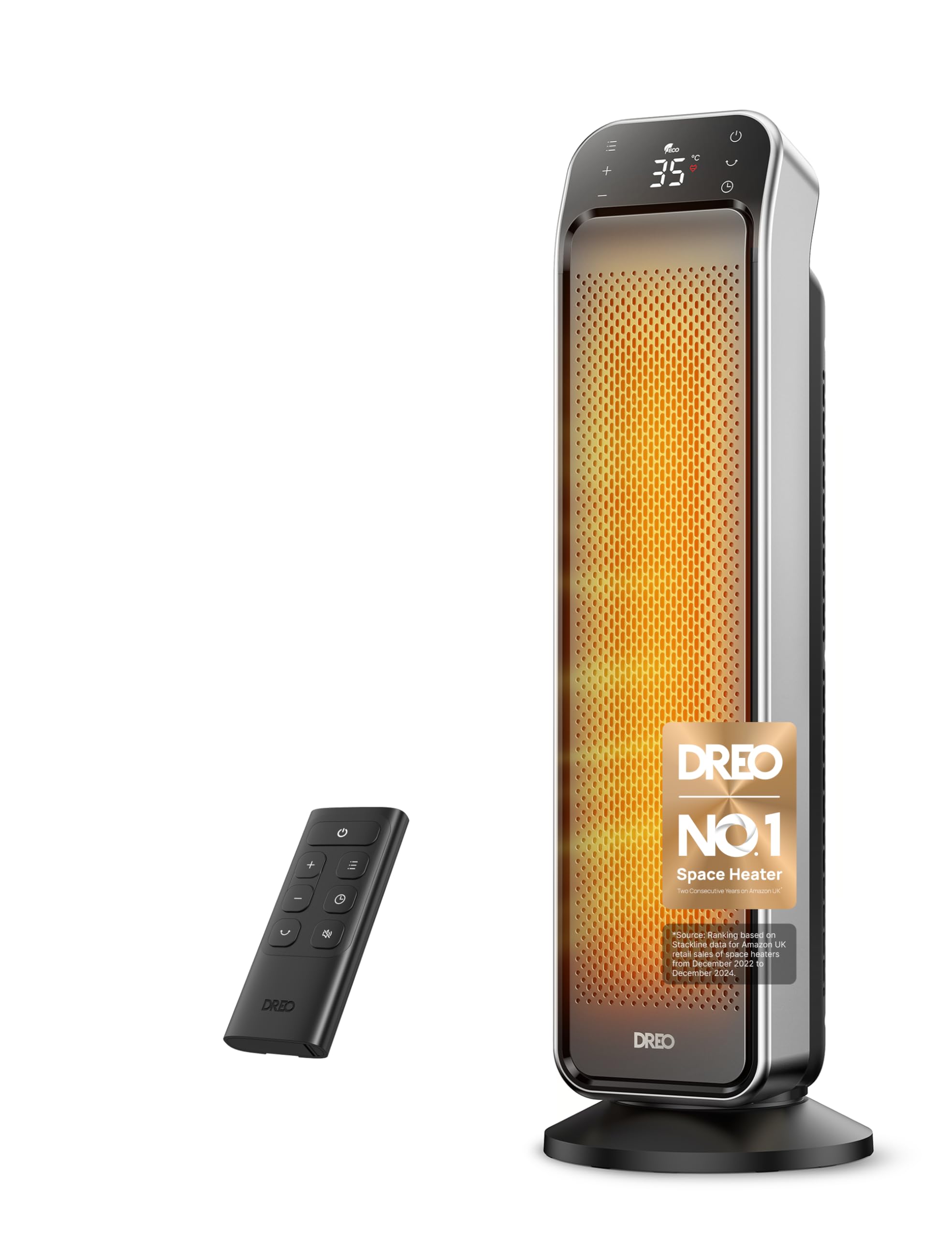
This tower heater combines powerful heating with whisper-quiet operation, making it an excellent choice for anyone needing to warm a larger space without disturbing noise.
Pros
- Heats rooms up to 25 square metres remarkably quickly with its ceramic heating technology
- Operates at an incredibly low 25dB sound level, perfect for bedrooms and offices
- Wide 70-degree oscillation distributes warmth evenly across the entire space
Cons
- The display lighting may fade after several months of regular use
- Takes up more floor space than compact models due to its tower design
- Fan-only mode offers limited power compared to the heating function
We found the Dreo 25 Inch particularly impressive when heating our test room. The warmth spreads rapidly, and we noticed the temperature rising within just a few minutes of switching it on.
The quietness genuinely surprised us during late-night use. We could barely hear it running on the lower settings, which made a huge difference when trying to sleep in a chilly bedroom.
The ECO mode works brilliantly for maintaining a consistent temperature without constant adjustments. We set our preferred temperature using the precise one-degree controls, and the heater managed everything automatically from there. The remote control proved handy for adjusting settings from across the room.
Safety features give us real peace of mind with this unit. The tip-over protection activated instantly when we accidentally knocked it during testing, and the child lock prevents curious little ones from changing settings. We appreciate the flame-retardant materials used throughout the construction.
The oscillation feature covers a generous area, eliminating cold spots we typically experience with static heaters. We switched between the four heating modes depending on how quickly we needed warmth, with the highest setting delivering impressive results in larger spaces.
3. Dreo Atom 316
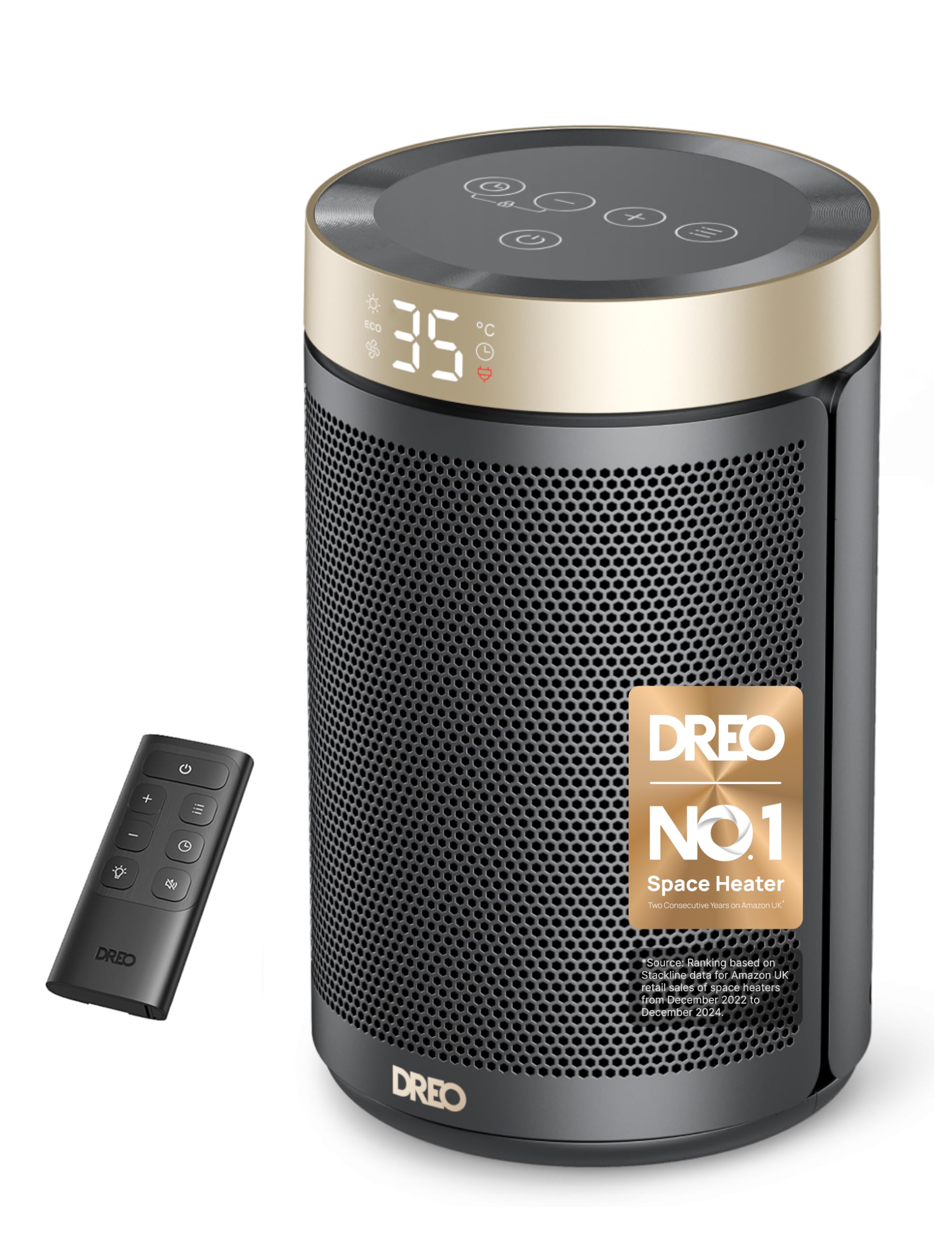
This compact heater punches well above its weight for warming larger rooms quickly, and the upgraded remote control makes it genuinely convenient to use from across the space.
Pros
- Heats up remarkably fast and reaches much further than we expected from such a compact unit
- Operates at an impressively low noise level that doesn’t interfere with work or sleep
- Remote control and precise temperature settings make daily use effortless
Cons
- The compact size means it works best as a supplementary heat source rather than primary heating
- Button labels could be more visible in low light conditions
- Takes up a permanent floor space as it’s not wall-mountable
We’ve been genuinely impressed by how quickly the Dreo Atom 316 warms our workspace. Within minutes of switching it on, we could feel the heat reaching across the room, which is something we weren’t expecting from such a small device.
The remote control feature has become something we use constantly. Being able to adjust the temperature without getting up from our desk or bed makes a real difference in daily comfort. The thermostat responds accurately, maintaining our chosen temperature without constant cycling that some heaters suffer from.
Noise levels remain pleasantly low even on the highest setting. We’ve used it during video calls and found it doesn’t create any background hum that becomes annoying over time. The ECO mode particularly impressed us by keeping the room comfortable whilst presumably using less energy.
The safety features work exactly as they should. We accidentally knocked it over whilst moving furniture, and it immediately shut off. The unit stays cool to touch on the exterior even after hours of use, which gives us confidence using it overnight.
Build quality feels solid despite the lightweight construction. We’ve been carrying it between rooms regularly, and the handle makes this easy. The gold finish looks more premium than typical plastic heaters, though this is obviously a personal preference.
4. PELONIS Electric Heater

This tower heater is worth considering if you need quick, widespread warmth in a large UK room without breaking the bank on energy costs.
Pros
- Heats up incredibly fast and distributes warmth evenly across the entire room without that uncomfortable dry, scorching feeling
- The oscillation feature and tall heating screen genuinely cover more area than standard tower heaters we’ve tested
- Runs whisper-quiet at night and the timer function lets you sleep without waking up to adjust settings
Cons
- The thermostat accuracy isn’t always spot-on, sometimes clicking off at slightly different temperatures than set
- Makes a bit more noise than advertised when running on high, though it’s still fairly quiet overall
- The remote is handy but the touch controls can be overly sensitive if you’re just trying to move it
We found this heater genuinely impressive when we first switched it on. The warmth kicked in within seconds, which was brilliant on a cold February morning. The room went from chilly to comfortable faster than any other heater we’d tried recently.
The oscillation makes a real difference in larger spaces. Instead of just heating the area directly in front of the unit, the wide sweeping motion pushed warm air throughout our living room. We noticed everyone in the room felt the warmth, not just whoever sat closest to it.
The ECO mode proved useful for overnight heating. We set it before bed and woke up to a comfortable temperature without the room feeling stuffy or overheated. The 24-hour timer meant we didn’t have to get up to turn it off, which was a genuine comfort during those frigid nights.
Portability is another strength. The handle on the back made it easy to carry between rooms, despite being a tower design. We moved it from the bedroom to the home office regularly without any hassle.
The noise level stays low enough for bedroom use, though on the highest setting you can hear a gentle hum. It’s nothing like the rattling sound some older fan heaters make. We could still watch television and have conversations without raising our voices.
5. Belaco 2500W Oil Filled Radiator
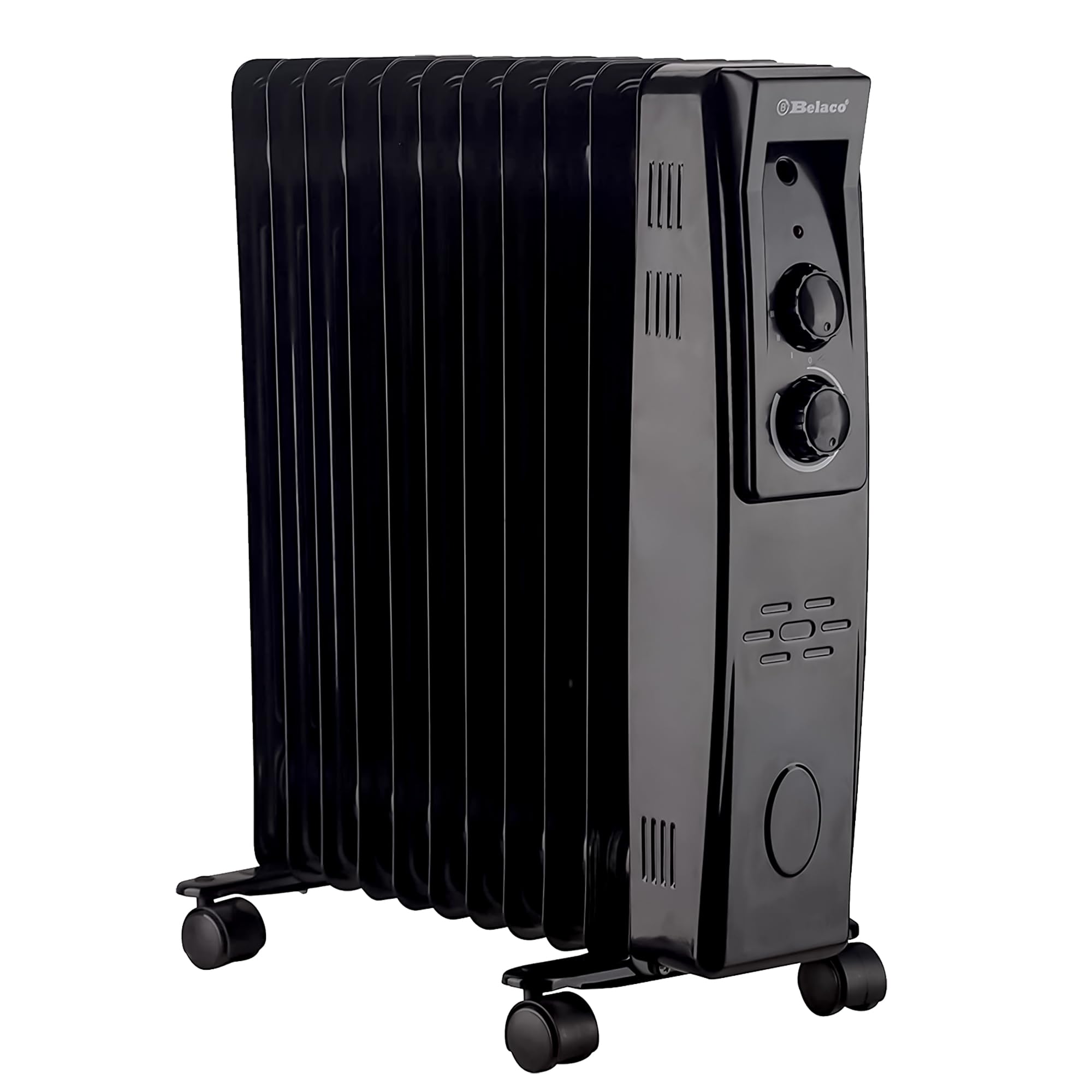
This oil-filled radiator delivers reliable warmth for larger spaces and moves easily between rooms, making it a solid choice if you need flexible heating without the noise.
Pros
- Heats spacious rooms effectively and retains warmth long after switching off
- Completely silent operation makes it perfect for bedrooms and offices
- Wheels and handle allow effortless movement throughout your home
Cons
- Takes longer to warm up compared to fan heaters
- Weighs over 8kg, which might feel heavy when lifting
- Limited temperature precision with the basic thermostat dial
We found the Belaco 2500W Oil Filled Radiator handled our large living room with ease during recent cold snaps. The 11 fins distribute heat evenly across the space, and we noticed the room stayed warm for ages even after turning it down.
Moving this heater between rooms proved surprisingly simple thanks to the castor wheels. We rolled it from the lounge to our bedroom without any struggle, though we did need to be mindful of the weight when navigating over door thresholds.
The three heat settings give us decent control over energy use. We typically run it on the middle setting during the day and switch to low at night, which keeps our bedroom comfortable without overheating.
Safety features worked as expected when we accidentally knocked it whilst hoovering. The tip-over switch cut power immediately, which gave us confidence using it around the house.
The black finish looks smarter than traditional white radiators and blends nicely with our décor. We appreciate that it doesn’t take up much floor space despite its heating capacity.
Buying Guide
When we’re choosing an electric heater for a large room, we need to consider several key factors to ensure we get the right product for our needs.
Room Size and Heating Power
The most important specification is wattage. We should look for heaters with at least 1,500 to 2,000 watts for rooms larger than 20 square metres. A general rule is to allow 100 watts per square metre of space.
Types of Heaters
Different heating technologies suit different situations:
| Heater Type | Best For | Heat Distribution |
|---|---|---|
| Convection | Prolonged use, whole room | Gradual, even warmth |
| Fan | Quick heating | Fast, directed heat |
| Oil-filled radiator | Overnight heating | Slow, retained warmth |
| Panel | Wall-mounted solutions | Steady, gentle heat |
Energy Efficiency Features
We should look for thermostats that maintain consistent temperatures and automatic shut-off functions. Timer controls help us run the heater only when needed, reducing electricity costs.
Safety Considerations
Overheat protection is essential for large heaters. Tip-over switches prevent accidents if the unit falls. Cool-touch exteriors protect children and pets from burns.
Portability and Placement
Wheels or handles make repositioning easier. We need to check the cord length reaches our power sockets without extension leads.
Noise Levels
Fan heaters produce more noise than oil-filled or panel models. If we’re using the heater in bedrooms or quiet spaces, we should opt for quieter options but overall these should not be considered as a best electric heater for a large room.
Running Costs
Higher wattage means increased electricity consumption. We can calculate approximate costs by multiplying the wattage by our energy tariff rate and hours of use.