

Laminate flooring offers an affordable and attractive option for homeowners looking to update their spaces. Installing it properly requires a quality underlay beneath the planks. The right underlay provides cushioning, moisture protection, and sound reduction that extends your floor’s lifespan.
Choosing the best underlay for laminate flooring depends primarily on the material type, thickness, and your subfloor conditions.
Foam underlays are budget-friendly and easy to install, whilst rubber options offer superior sound dampening. Cork provides excellent thermal insulation but costs more. If you have concrete subfloors, a moisture barrier becomes essential to prevent damage from dampness rising through the floor.
We tested multiple underlays across different price points and materials to find the options that deliver the best performance and value for various installation needs.
1. AcuStick Acoustic Sonic Gold Underlay

This underlay delivers solid soundproofing and moisture protection at a reasonable price, though you’ll want to double-check the actual coverage before ordering.
Pros
- Noticeably reduced footfall noise between rooms during our installation
- Gold foil moisture barrier worked brilliantly in a ground floor room prone to dampness
- Felt substantial underfoot without creating too much floor height
Cons
- Actual coverage fell short of the advertised 15 square metres in our experience
- Requires additional tape purchase to join seams properly
- Slightly tricky to keep flat whilst rolling out during fitting
We laid this underlay in a bedroom and immediately felt the difference in both warmth and sound reduction. The 5mm thickness provides a decent cushion without raising the floor too much, which mattered for our door clearances.
The gold foil backing did exactly what we needed for moisture protection. Our ground floor room had always felt slightly cold, but this underlay made a genuine difference to heat retention.
Rolling it out took a bit of patience as it wanted to curl back on itself. We found weighing down the edges helped whilst we cut it to size. The material cuts cleanly with a sharp knife, making it straightforward to fit around awkward corners.
Sound insulation proved impressive once we finished the laminate installation. Footsteps from the kids’ room above became much less intrusive. However, we did notice the roll measured closer to 12 square metres rather than the stated 15, leaving us short on coverage for one room.
The seams need proper taping to stay together, which adds to the overall cost. We used the recommended tape and found it held well, but wish this had been included with the underlay itself.
2. Comfort Laminate Wood Flooring Underlay

This 2mm underlay offers solid value for money and performs well under laminate flooring, though you’ll need to handle it carefully during installation to avoid tears.
Pros
- Excellent value compared to high street retailers whilst still delivering reliable performance
- Works effectively with underfloor heating systems and reduces impact noise
- Suitable for multiple flooring types including laminate, engineered wood, and vinyl
Cons
- The foam can stick together in the roll, making it difficult to unroll without tearing
- At 2mm thickness, it provides less cushioning than thicker premium alternatives
- Delivery times can be inconsistent and longer than expected
We found this underlay does exactly what it promises without any fuss. The 15 square metre roll covered our dining room floor with ease, and laying it down was straightforward once we got it unrolled properly.
The sound reduction really impressed us when we walked across the finished floor. Our downstairs neighbours haven’t complained once since we installed it, which is a marked improvement from before.
We did encounter some frustration when the foam stuck to itself in spots. Taking our time and being gentle helped, but we still lost a small section to tearing. The material feels thinner than some underlays we’ve used previously, yet it performed well enough for our needs.
The price point makes this an attractive option if you’re working within a budget. We’ve used it under both laminate and loose lay vinyl, and it provided good stability in both applications. For the cost, we got a reliable underlay that does the job without breaking the bank.
3. FloorPro Smoothfit 3mm Silver Underlay
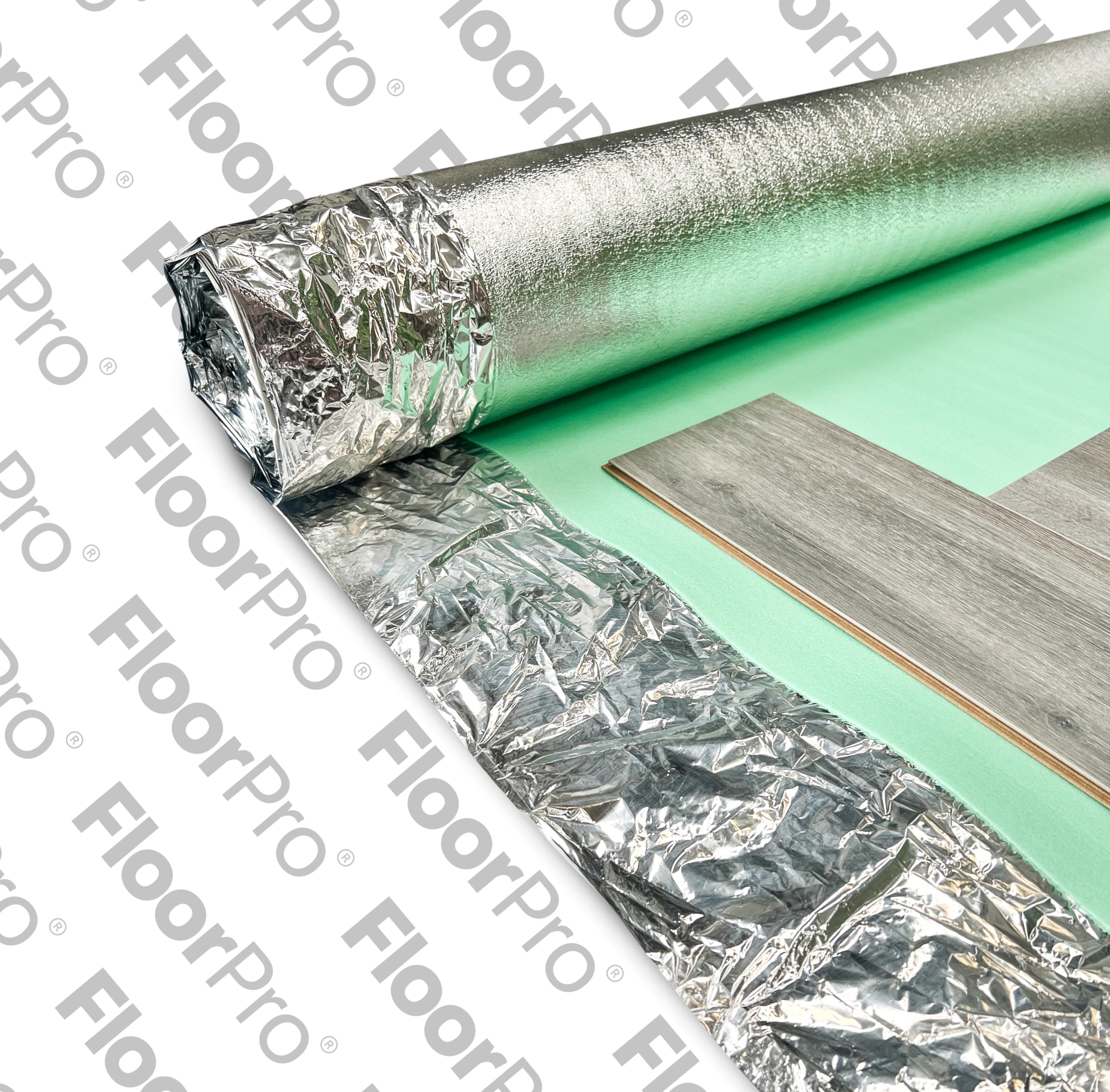
This underlay delivers solid performance for laminate and wood floors whilst offering damp protection at a competitive price point.
Pros
- The silver foil damp proof membrane works brilliantly in moisture-prone rooms like kitchens and bathrooms
- Decent thickness at 3mm smooths out minor bumps in the subfloor without feeling too spongy underfoot
- Noticeably reduces footfall noise and adds a layer of warmth to cold floors
Cons
- You’ll need to purchase separate tape to seal the seams properly, which adds to the overall cost
- The roll can be a bit tricky to handle during installation if you’re working alone
- Not the thickest option available if maximum sound insulation is your priority
We found the FloorPro Smoothfit 3mm Silver Underlay performed admirably during our recent bathroom flooring project. The silver foil membrane gave us confidence when laying it over a concrete subfloor that occasionally shows signs of dampness.
Installation proved straightforward once we got the hang of unrolling and cutting it to size. The material feels robust without being overly rigid, which helped when working around awkward corners and doorways.
The acoustic benefits became apparent immediately after completing the installation. Walking across the new floor felt softer and quieter compared to our previous setup. The thermal insulation also made a genuine difference, particularly noticeable when stepping onto the floor first thing in the morning.
The requirement for specialist tape to join seams felt like an unnecessary extra expense. We had assumed the underlay would come with some method of sealing included in the package.
4. B2C XPS Foam Underlay

This XPS foam underlay delivers solid thermal and acoustic performance at a budget-friendly price point, making it a practical choice for most laminate installations.
Pros
- Cuts easily to size with basic tools and lays flat without much fuss
- Provides noticeable warmth underfoot whilst reducing sound transmission by roughly 20 decibels
- Comes in manageable 5m² packs rather than oversized rolls that create waste
Cons
- The foam material can arrive with compression damage if the courier isn’t careful
- At 5mm thick it won’t hide significant floor imperfections like thicker options might
- The boards feel quite fragile during handling and can tear if you’re not gentle
We found this underlay straightforward to work with during installation. The boards measure 1000mm by 500mm, which meant we could position them quickly without wrestling with unwieldy rolls. Cutting them to fit around doorways and corners required nothing more than a sharp Stanley knife.
The thermal improvement was immediately apparent once we’d finished laying our laminate. Our feet stayed considerably warmer on cold mornings, and the 2 tog rating seems accurate based on what we experienced. The sound dampening also made a real difference when walking across the floor.
We did notice the material’s delicate nature whilst unpacking and laying it. A few boards in our delivery had minor dings from transit, though this didn’t affect performance. You’ll want to take care not to drag heavy furniture across it before the laminate goes down, as the foam compresses and tears more easily than denser alternatives.
The moisture resistance worked well in our ground floor room. We appreciated that it doesn’t absorb water, which gave us confidence about protecting the laminate from any dampness below. For the price per square metre, this underlay represents decent value if you’re covering a moderate area and don’t need premium features.
5. Comfort Silver 3mm Underlay

We found this underlay to be a solid choice for laminate installations where you need reliable moisture protection at a reasonable price point.
Pros
- Built-in silver foil barrier effectively stops moisture from rising through concrete subfloors
- Sturdy enough to protect laminate from everyday wear without feeling too spongy underfoot
- Straightforward to roll out and cut to size during installation
Cons
- Requires separate vapour tape to seal the joints properly, adding extra cost
- May interfere with WiFi signals when installed on upper floors according to some users
- Only 3mm thickness provides moderate acoustic dampening rather than premium sound reduction
We recently laid this underlay across a concrete ground floor and noticed it handled the moisture barrier job well. The silver foil layer gave us confidence that damp wouldn’t creep up into our laminate planks over time.
Rolling it out was easier than expected. The material stayed flat without constantly curling back on itself, which made measuring and cutting much less frustrating than some cheaper alternatives we’ve tried before.
The acoustic performance sits somewhere in the middle range. We could still hear footsteps from the room above, but general walking noise was noticeably reduced compared to having no underlay at all.
One thing to remember is that you’ll need to budget for vapour tape separately. We initially overlooked this detail and had to make an extra trip to seal all the seams properly between rolls.
The 15 square metre coverage worked perfectly for our medium-sized room. At just 1kg per roll, carrying it upstairs or moving it around the workspace wasn’t a problem at all.
Buying Guide
When we’re shopping for laminate underlay, we need to consider several key factors to make the right choice. The most important features will depend on our specific flooring situation and requirements.
Thickness and Density
The thickness of underlay typically ranges from 2mm to 5mm. Thicker options provide better cushioning and sound absorption, but we shouldn’t exceed the manufacturer’s recommendations for our laminate flooring. Density matters too because a denser underlay offers better support and durability.
Moisture Protection
We should look for underlay with a moisture barrier if we’re installing flooring over concrete or in areas prone to dampness. Some products include a built-in damp-proof membrane (DPM), whilst others require a separate moisture barrier underneath.
Acoustic Performance
If noise reduction is a priority, we need to check the impact sound rating. This is measured in decibels (dB), and a higher reduction number means better soundproofing. This feature is particularly important for upstairs rooms or flats.
Key Features to Consider
| Feature | What to Look For |
|---|---|
| Material | Foam, rubber, cork, or felt |
| Compression resistance | Higher values for heavy furniture areas |
| Thermal resistance | Important for underfloor heating compatibility |
| Warranty | Longer warranties indicate better quality |
We must also verify that the underlay is compatible with underfloor heating systems if we have them installed. Some materials insulate too well and reduce heating efficiency.
The price often reflects quality, but we shouldn’t assume the most expensive option gives the best underlay for laminate flooring – read our product reviews and identify the right product for your floor.