

Insulation board is essential for improving energy efficiency in homes and commercial buildings. Cutting it accurately requires the right tool to ensure clean edges and proper installation. The wrong saw can lead to jagged cuts, wasted material, and frustration during your project.
Choosing the best saw for cutting insulation board depends on the board type, thickness, and your project scale.
Rigid foam boards need different tools than fibreglass batts, and handheld options work well for small jobs whilst powered saws handle larger installations more efficiently. We tested multiple saws across different insulation materials to identify the most effective tools for achieving precise, efficient cuts.
Best Saws for Cutting Insulation Board
Below is our full list of the best saws for cutting insulation board. We’ve tested and reviewed each option to help you find the right tool for your project.
1. Bahco ProfCut Insulation Saw

This saw excels at cutting mineral wool and fibre insulation with minimal dust, though it struggles with thicker rigid foam boards.
Pros
- Produces remarkably little dust when cutting through Rockwool and mineral fibre insulation
- The waved tooth design glides through soft insulation materials without snagging or tearing
- Lightweight construction makes it comfortable during extended cutting sessions
Cons
- Struggles to maintain straight cuts through 100mm PIR or Kingspan boards due to blade flexibility
- Edge dulls fairly quickly when used frequently on dense materials
- The flexible blade requires a steady hand to avoid wandering cuts in thicker stock
We found the Bahco ProfCut performs brilliantly on mineral wool and Rockwool slabs. The waved tooth pattern works more like a serrated knife than a traditional saw, which explains why it creates so little airborne dust. After cutting through several rolls of insulation, we barely needed to hoover up any mess.
The 550mm blade length gives decent reach for deeper cuts. When we tackled pipe insulation sections and standard mineral wool batts, the cutting action felt smooth and required minimal effort. The rubber handle provides a secure grip even when wearing work gloves.
However, the blade’s flexibility becomes problematic with rigid foam boards. We noticed the saw wandering off line when cutting through 100mm Kingspan, requiring multiple passes to achieve a clean edge. It works better on thinner sections up to 50mm, but anything beyond that tests your patience.
The edge retention isn’t exceptional either. After cutting about 40 square metres of material, we noticed the blade losing its initial sharpness. The good news is that Bahco sells a compatible sharpening tool that restores the cutting performance quickly.
2. Sarsen Insulation Knife

This stainless steel serrated knife is worth buying if you need clean, dust-free cuts through various insulation materials without the hassle of powered tools.
Pros
- Slices through rockwool and PIR boards with minimal dust and effort
- Built-in ruler on the blade eliminates the need for separate measuring tools
- Lightweight design at 220g reduces hand fatigue during extended cutting sessions
Cons
- Manual operation requires more physical effort than electric alternatives for thick materials
- Blade flexibility can make perfectly straight cuts challenging on denser boards
- Limited to softer insulation materials and won’t handle rigid construction materials
We found this knife genuinely impressive when cutting through loft insulation. The serrated blade glides through rockwool like it’s nothing, producing far less irritating dust than traditional saws. After working with it on a shed insulation project, we appreciated how the sharp teeth grabbed the material without tearing or creating messy edges.
The integrated ruler proved more useful than we initially expected. Instead of constantly reaching for a tape measure, we could mark and cut in one smooth motion. The clear markings stayed readable even after multiple uses, which isn’t always the case with printed measurements on tools.
Handling felt comfortable during extended cutting sessions thanks to the ergonomic grip. We noticed the blade does flex slightly under pressure, which took a bit of getting used to when aiming for perfectly straight cuts. The included safety sheath is a thoughtful addition that protects both the blade and our hands when storing it in a toolbox.
The dual-edge design worked well across different materials. We tested it on polystyrene sheets and foam panels, and it performed consistently across the board. At this price point and with solid user feedback, it’s a reliable choice for anyone regularly working with insulation materials.
3. TRADE 4 YOU LTD Insulation Knife 3-Pack

This three-pack offers excellent value if you need multiple tools for a crew or want spares on hand for larger insulation projects.
Pros
- Comes with three complete knives and sheaths, perfect for keeping one in different locations or sharing with helpers
- The serrated stainless steel blade cuts through various insulation types without getting stuck
- Rubber grip stays comfortable during extended cutting sessions
Cons
- The blade could be slightly longer for thicker insulation boards
- Sheath fit feels a bit loose and might not hold securely when moving around a worksite
- Manual cutting requires more effort on dense materials like rockwool compared to powered options
We found this set particularly handy when tackling a loft insulation project last month. Having three identical tools meant we could leave one upstairs, keep one in the van, and have a spare ready. The serrated edge grips the material well and produces clean cuts without tearing or crumbling the edges.
The 420mm total length provides decent reach without feeling unwieldy. We appreciated the rubber handle during a full day of cutting PIR boards, as it prevented hand fatigue and blisters. The stainless steel construction held up well against the abrasive nature of fibreglass and foam materials.
Cutting through polystyrene was effortless with the serrated teeth. The blade glides through XPS boards smoothly, though denser materials like rockwool require a bit more sawing motion. We noticed the tool works best with steady, even strokes rather than aggressive pushing.
The included sheaths are a practical addition, though they could fit more snugly. We occasionally had a knife slip out when bending over, which became mildly annoying on active job sites. Despite this minor inconvenience, the overall package delivers solid performance for the price point.
4. Spear & Jackson Predator Insulation Saw
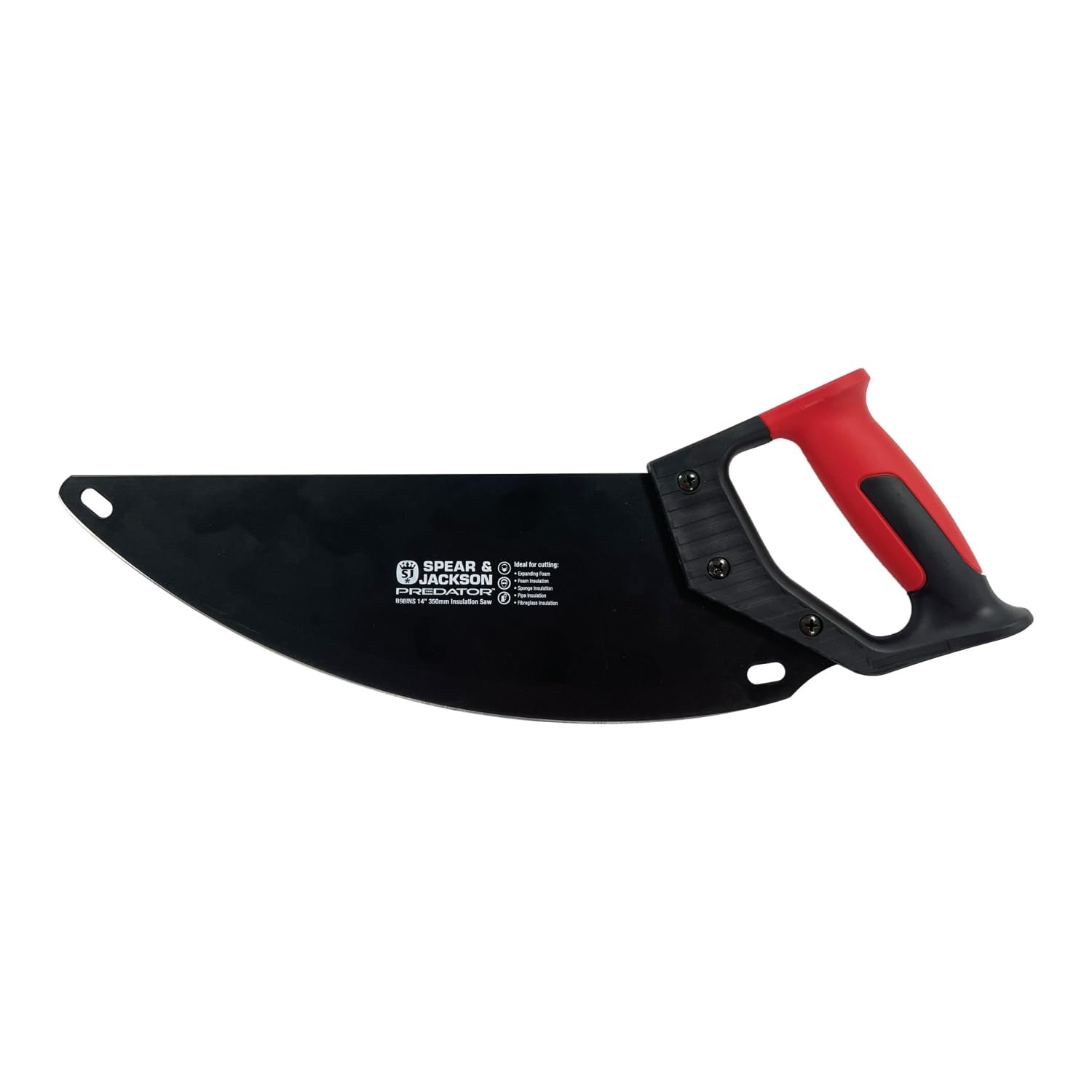
This hand-powered saw delivers clean cuts through insulation boards with minimal dust, making it a solid choice for both DIY enthusiasts and professionals.
Pros
- Cuts through insulation materials smoothly with very little airborne dust
- The 14-inch blade length provides excellent reach without being unwieldy
- Comfortable grip makes extended cutting sessions less tiring
Cons
- Works best with short strokes rather than long sweeping motions for straight cuts
- The larger size can be awkward in tight spaces or corners
- Takes a bit of practice to master the proper cutting technique
We found this saw exceptionally effective when cutting through rigid foam boards last week. The blade glides through the material without the ragged edges we’ve experienced with standard saws.
The handle feels secure in our grip, and we appreciated how little mess it created compared to using a powered tool. We tested it on several thicknesses of insulation board, and it handled everything from thin sheets to thicker panels without binding.
One thing we noticed is that the cutting action differs from conventional saws. Short, controlled strokes give the best results, whilst longer strokes tend to produce less accurate cuts. Once we adjusted our technique, the precision improved dramatically.
The carbon steel blade stayed sharp through multiple projects. We also used it on some expanding foam that had set around a window frame, and it sliced through cleanly. The blade design genuinely does reduce the amount of dust and particles that usually fly about when cutting these materials.
5. TRADE 4 YOU Insulation Knife

This manual saw offers excellent value for anyone working with various insulation materials, particularly excelling with rockwool and PIR boards.
Pros
- Cuts through multiple insulation types cleanly without producing excessive dust
- The serrated stainless steel blade stays sharp and handles 100mm and 200mm insulation rolls effortlessly
- Lightweight at 200g with an ergonomic rubber handle that reduces hand fatigue during extended use
Cons
- Requires some physical effort when cutting through denser materials like hemp insulation
- The 280mm blade length might feel short for cutting very thick boards in one pass
- Being entirely manual means you’ll need good arm strength for larger projects
We found this knife surprisingly effective when working through a loft insulation project last month. The serrated edge gripped the rockwool fibres perfectly and made clean cuts without the material compressing or tearing. PIR boards sliced through with minimal resistance, which saved us considerable time on complex fitting work.
The included sheath is a practical touch for safe storage between cuts. We appreciated how the blade maintained its sharpness throughout an entire day’s work on cavity wall insulation. The rubber handle provided decent grip even when our hands got dusty from the materials.
For solid foam boards and polystyrene, this tool performed admirably without creating the mess that powered saws often produce. The stainless steel construction feels robust enough for regular site use. We did notice it took more effort with tougher hemp insulation compared to standard rockwool, but it still managed the job where other knives completely failed.
At this price point, it’s difficult to fault the overall performance. The 420mm total length gives decent reach without being unwieldy in tight spaces.
Buying Guide
When we’re shopping for a saw to cut insulation board, several key factors help us make the right choice. The blade type matters most because it determines how clean our cuts will be.
Blade Considerations
We need to look for fine-toothed blades that won’t tear or crumble the insulation material. Blades with 10-12 teeth per inch work well for most insulation boards. Longer blades give us more cutting capacity for thicker materials.
Power and Control
Manual saws offer excellent control for precise cuts and don’t require electricity. Powered options save time on larger projects but may cost more. We should consider how often we’ll use the tool and the project size before deciding.
Key Features to Evaluate
| Feature | What to Look For |
|---|---|
| Handle comfort | Ergonomic grip that reduces hand fatigue |
| Blade length | Matches the thickness of boards we’re cutting |
| Weight | Light enough for extended use |
| Blade replacement | Easy to change and readily available |
Safety and Durability
We want saws with protective guards and sturdy construction that will last through multiple projects. The best saw for cutting insulation board features a handle that should provide a secure grip even when wearing work gloves.
Budget Planning
Price varies widely based on features and build quality. We don’t always need the most expensive option, but investing in decent quality prevents frustration and repeat purchases. Consider the total cost including replacement blades over time.