

Dishwashers have become essential appliances in modern kitchens, helping families save time and water compared to washing by hand. For households with children, an energy efficient model can reduce utility bills whilst handling the heavy loads that come with family life.
When choosing the best energy efficient dishwasher for families, capacity and energy rating are the most important factors to consider.
Look for models with adjustable racks and flexible loading options to accommodate everything from baby bottles to large serving dishes. Energy labels will show annual consumption figures, but also consider wash cycle length and water usage per load.
We tested ten energy efficient dishwashers to identify the ones that offer the best combination of capacity, running costs, and cleaning performance for busy families.
1. Bosch Series 4 SMS4EMW06G
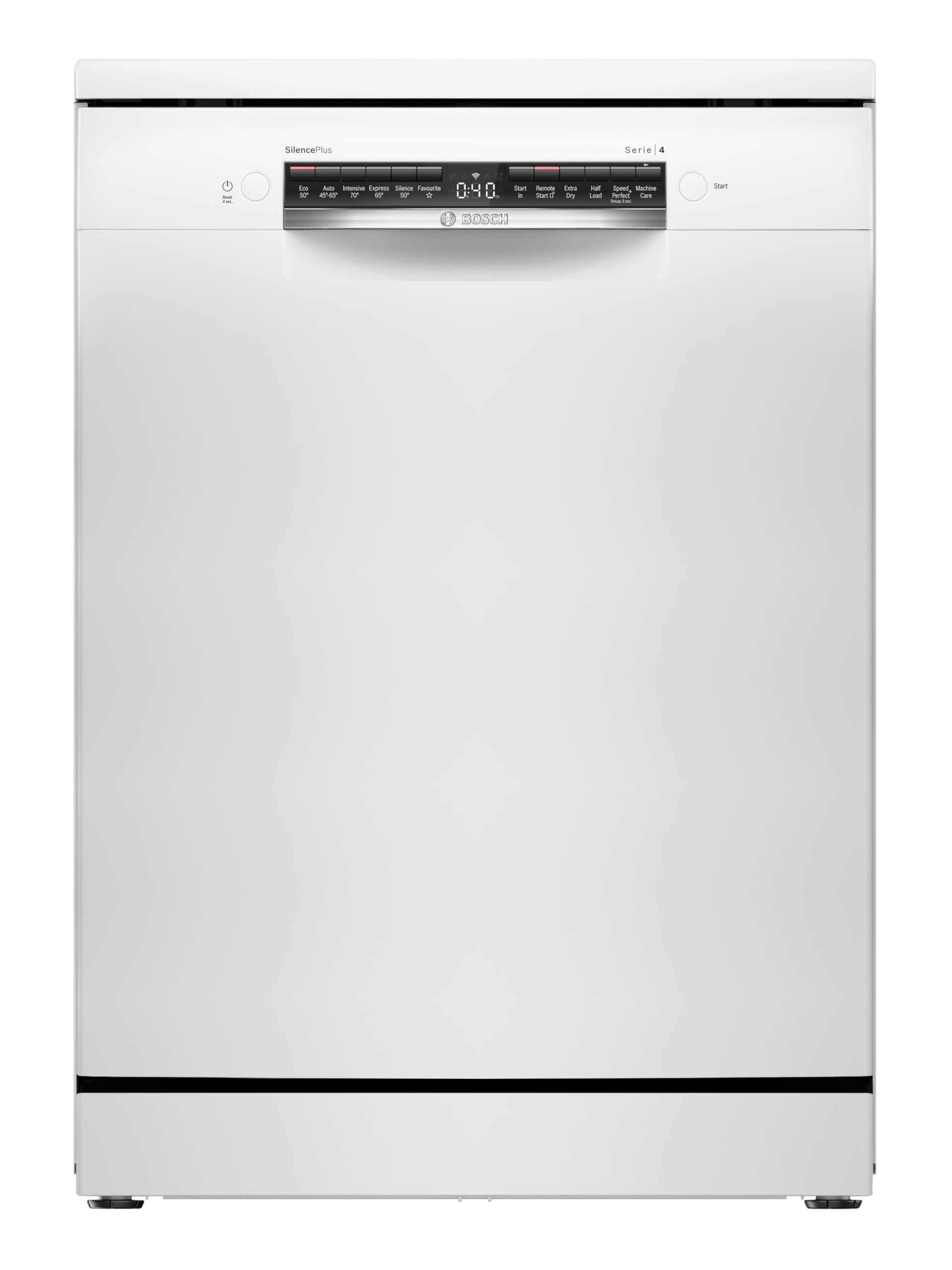
This dishwasher delivers excellent energy efficiency at 65 kWh per 100 cycles whilst accommodating large family loads with smart features that genuinely make daily washing easier.
Pros
- Operates whisper-quiet at 42 decibels, making it nearly silent during evening meals
- Automatic door opening after cycles ensures everything dries thoroughly without extra energy use
- Flexible cutlery drawer and adjustable racks adapt brilliantly to awkward-sized pots and tall glasses
Cons
- Some family members may need time adjusting to the top cutlery drawer layout instead of traditional baskets
- Lowering the top rack limits how large your bottom plates can be
- The 55-minute quick cycle works well but longer eco programmes take considerable patience
We’ve been genuinely impressed with how this Bosch handles our daily washing needs. The 14-place setting capacity means we can load breakfast dishes, lunch plates, and dinner cookware all in one go without playing dishwasher Tetris.
That ExtraDry feature really does what it promises. The door pops open automatically at the end, letting steam escape naturally. Our plastic containers come out properly dry rather than sitting in puddles like they did with our old machine.
The app connectivity through Home Connect adds convenience we didn’t know we needed. Starting a cycle remotely means we can run it during off-peak hours without staying up late. The Silence on Demand feature pauses the cycle if we need to take a phone call in the kitchen.
Loading remains straightforward thanks to the Rackmatic system. We regularly adjust the top basket height to fit large serving platters on the bottom whilst still washing wine glasses up top. The VarioDrawer cutlery tray took about a week to get used to, but now we appreciate how much cleaner knives and forks come out compared to cramming them in a basket.
At 42 decibels, this machine truly runs quietly. We often forget it’s running until we notice the door has popped open. That matters during family film nights or when the baby’s napping.
The Glass Care technology keeps our wine glasses spotless without that cloudy film we used to battle. Water softening happens automatically, which protects both our glassware and the machine itself from limescale buildup.
2. Beko BDFN36550PFG Dishwasher
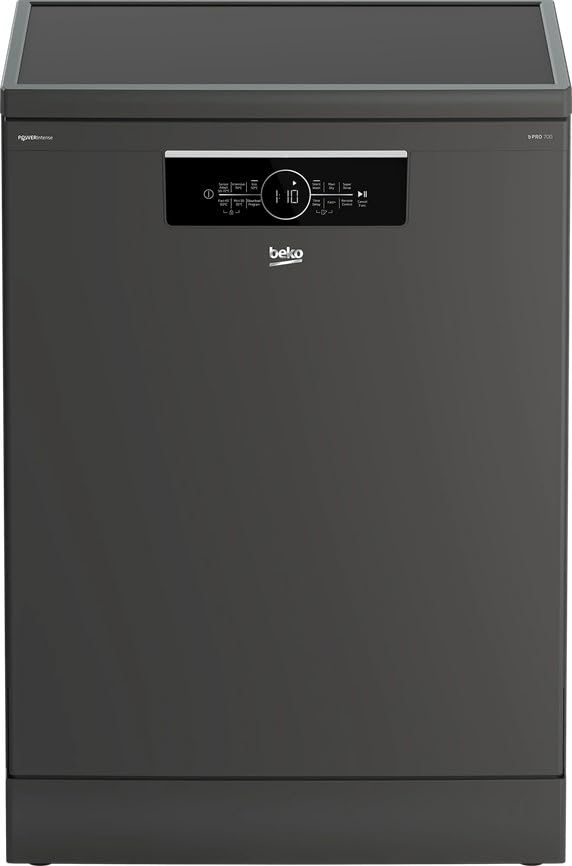
This dishwasher is worth considering if you’re feeding a larger household and want to keep energy bills in check whilst getting reliably clean dishes.
Pros
- Holds enough for family dinners and leftovers without needing to run it twice
- The door pops open automatically after washing to let everything dry naturally, which actually works
- Runs quietly enough that we didn’t have to pause conversations in the kitchen
Cons
- Takes up standard full-size space, so measure your kitchen gap before ordering
- The graphite finish shows fingerprints more than we expected
- Fast mode is handy but doesn’t handle heavily baked-on food as thoroughly
We’ve been using this Beko for a few weeks now and it’s handled everything from breakfast bowls to roasting tins without complaint. The 15 place settings mean we can load up after Sunday lunch and still have room for serving dishes.
What impressed us most was how the SelfDry feature genuinely improved drying results. The door swings open a few centimetres once the cycle finishes, letting steam escape instead of condensing back onto your plates. We’re not reaching for tea towels nearly as often.
The Fast+ function cuts washing time significantly when we’re in a rush. It’s ideal for lightly soiled items but struggles with anything that’s been sitting around. We learned to scrape plates properly before loading them in quick mode.
Energy consumption sits at a respectable level for daily use. Our electricity usage hasn’t spiked since installation, which matters when you’re running it five or six times weekly. The adjustable upper basket slides up and down easily, letting us fit tall wine glasses or stack smaller items as needed.
At 42 decibels, it’s genuinely one of the quieter machines we’ve tested. We can run it during evening telly without cranking up the volume. The graphite finish looks smart in our kitchen, though it does need wiping down regularly to keep it looking pristine.
3. COMFEE’ Table Top Dishwasher
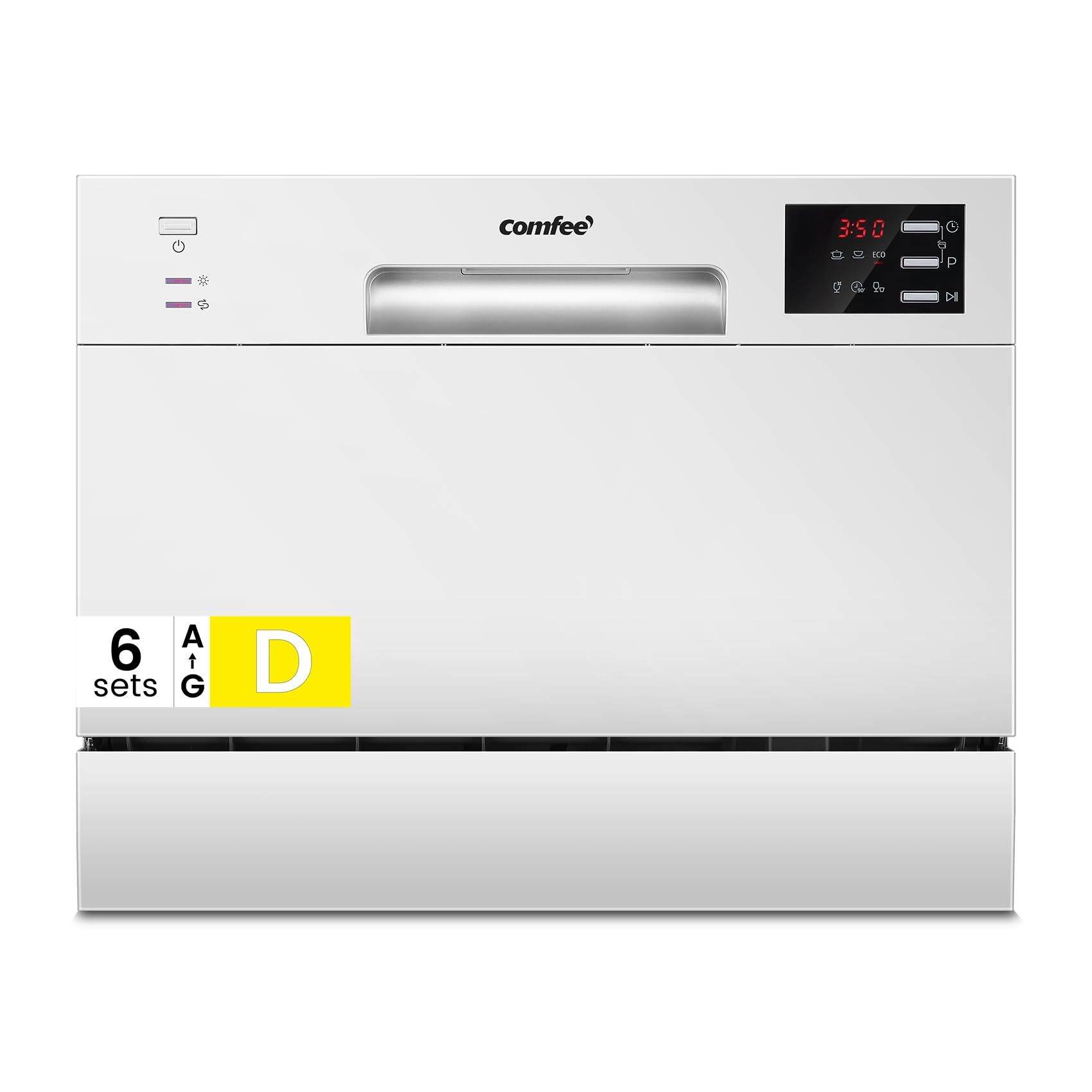
This compact dishwasher delivers impressive energy savings for small families whilst fitting neatly on your worktop without sacrificing cleaning performance.
Pros
- Uses only 6.5 litres per cycle, saving significant amounts of water compared to washing by hand
- Delay start function lets you run cycles during cheaper electricity hours overnight
- Remarkably quiet at 47 decibels, barely noticeable when running in the background
Cons
- Six place settings might feel limiting when you have guests over for dinner
- Standard dinner plates over 250mm won’t fit inside the compact interior
- Class D energy rating isn’t the most efficient classification available today
We’ve been using this COMFEE’ dishwasher for several weeks now and it’s transformed our evening routine. The countertop design means we didn’t need to sacrifice any cupboard space, and installation took less than 20 minutes with the supplied hose connected directly to our kitchen tap.
The water consumption impressed us straight away. We measured our typical hand washing routine and realised we were using over 30 litres for the same amount of dishes this machine handles with just 6.5 litres. The energy usage of 0.61 kWh per cycle keeps running costs low, and we’ve set up the delay timer to run overnight when our electricity tariff drops.
Cleaning performance exceeded our expectations for such a compact unit. We loaded it with breakfast bowls, lunch plates, and dinner cutlery, and everything emerged spotless. The six wash programmes give us flexibility depending on how dirty things are, with the rapid cycle perfect for lightly soiled items.
The control panel uses simple icons that made sense immediately without consulting the manual. LED indicators tell us when to top up rinse aid or salt, which helps maintain consistent results. At 47 decibels, we can comfortably watch television whilst it runs in the same room.
The compact size does present some limitations. Larger dinner plates required slight angling to fit properly, and we can’t load as many serving dishes as we’d like after a big meal. Six place settings suits our household of two perfectly, but families of four or more might find themselves running multiple cycles daily.
4. Russell Hobbs Freestanding Dishwasher
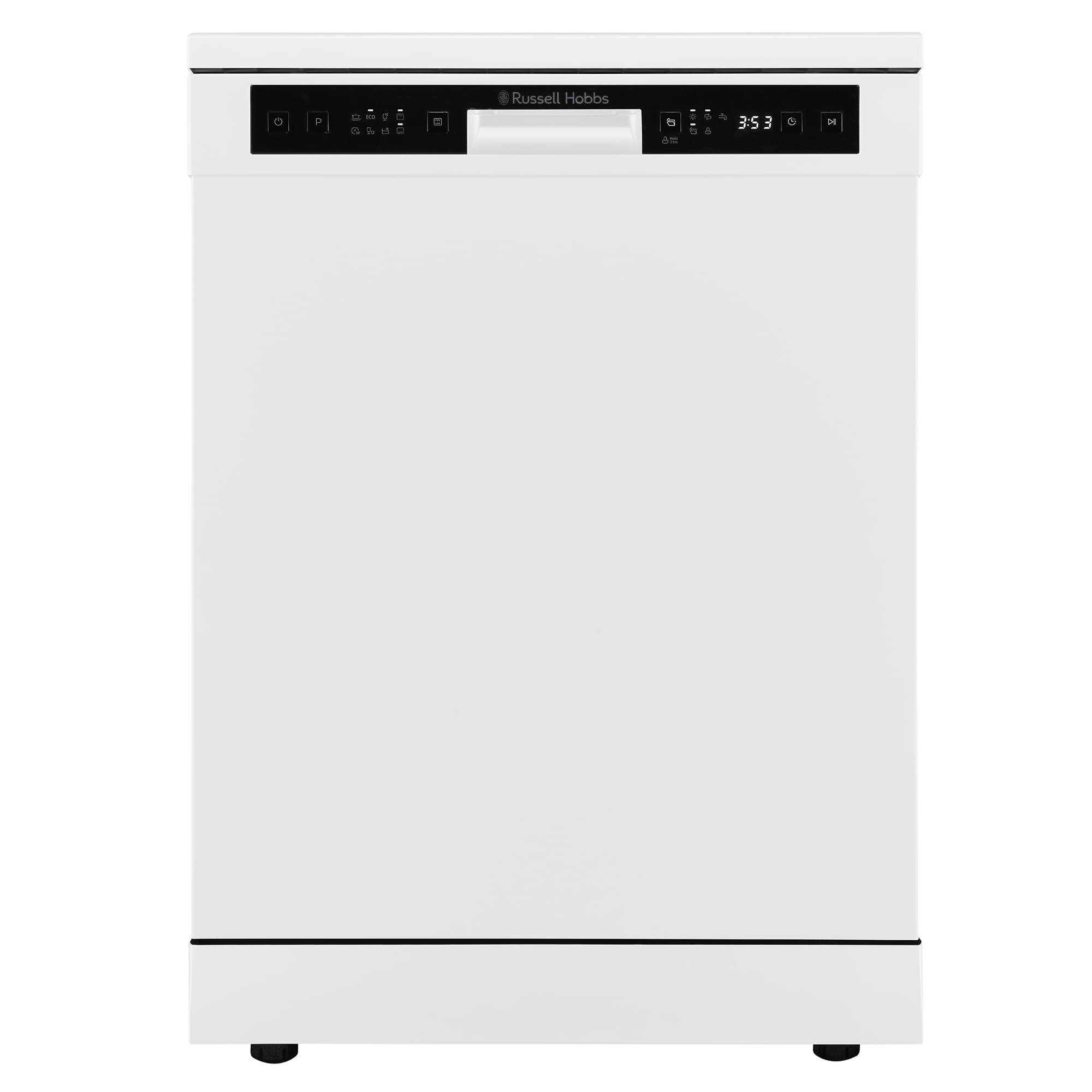
This dishwasher offers decent capacity and programme options for families but falls short on build quality and consistency.
Pros
- Fits 14 place settings comfortably with adjustable baskets and clever cutlery storage options
- Six wash programmes including a rapid 30-minute cycle give flexibility for different cleaning needs
- Relatively quiet operation at 49 decibels and includes useful child lock and leak protection features
Cons
- Build quality feels flimsy and less sturdy compared to other models in this price range
- Some units arrive with dents or damage, suggesting quality control issues during manufacturing
- Wash cycles run quite long and the quick wash programme doesn’t deliver impressive results
We found the 14 place setting capacity genuinely useful for family meals. The adjustable upper basket helped us fit in various dish sizes, though larger items like halogen bowls proved tricky to accommodate. The mini cutlery tray sits at the top whilst a traditional basket offers extra space below.
The cleaning performance delivered satisfactory results on most cycles. We appreciated how quiet it runs during operation, making it suitable for open-plan living spaces. The auto door open feature at the end of cycles helps dishes dry naturally without manual intervention.
However, the build quality disappointed us straight away. The materials feel thin and lightweight compared to other dishwashers we’ve tested recently. Several owners reported receiving dented units, which raises concerns about packaging and quality standards.
The wash programmes take considerably longer than expected. Even the economy mode felt drawn out for daily use. We were particularly underwhelmed by the 30-minute rapid cycle, which struggled with anything beyond lightly soiled items.
The D energy rating means it consumes 85 kilowatt hours per 100 cycles. This sits at the lower end of efficiency ratings, so running costs may add up over time. The delay start function up to 24 hours ahead proved handy for taking advantage of off-peak electricity rates.
Safety features include child lock, overflow protection, and leak detection. These gave us peace of mind, especially in households with young children. The touch controls respond well, though the interface takes a bit of getting used to initially.
5. Hisense HS622E90XUK Freestanding Dishwasher
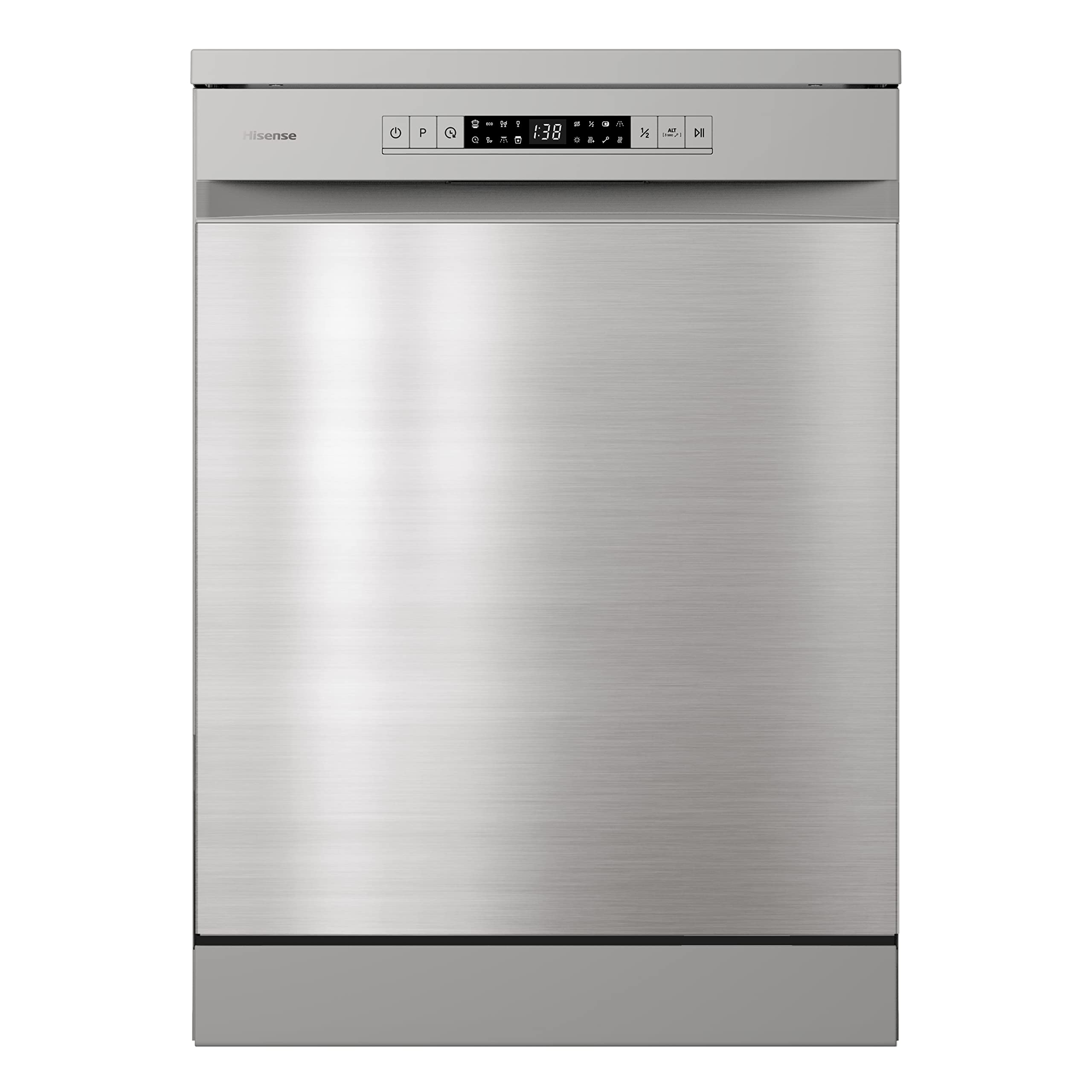
This dishwasher delivers solid cleaning performance with excellent energy efficiency at a budget-friendly price point, making it a smart choice for families who want to reduce running costs without sacrificing capacity.
Pros
- Holds 143 items across 13 place settings, easily handling a full day’s worth of dishes for medium-sized families
- Eco programme significantly reduces water and electricity consumption, keeping utility bills low
- Quick 30-minute cycle tackles lightly soiled plates when you’re in a rush
Cons
- Top rack layout feels awkward and doesn’t accommodate as much as we’d like
- Shorter eco-friendly cycles sometimes struggle with heavily soiled items
- Upper basket arrangement takes getting used to compared to other models
We’ve been running this Hisense through its paces, and it genuinely surprised us with how much we could fit in the bottom rack. Loading dinner plates, pots, and serving dishes was straightforward, though the top section required a bit more thought to maximise space.
The Dry+ feature proved particularly useful during our testing. Plates and glasses came out ready to put straight into the cupboard, which saved us time in the evening routine. The increased temperature during the final rinse makes a noticeable difference.
Operating at just 47 decibels, we barely noticed it running during dinner. The push-button controls are intuitive, and switching between the economy, intensive, and rapid cycles takes seconds. The built-in water softener means we didn’t need to worry about limescale buildup in our hard water area.
Energy consumption sits at 93 kilowatt hours per 100 cycles, which translates to real savings over a year of daily use. We appreciated how the eco programme balanced cleaning power with efficiency, though heavily soiled pans occasionally needed a second go on the intensive setting.
The adjustable basket system offers decent flexibility once you understand how it works. We found ourselves reconfiguring it based on whether we were washing wine glasses or tall bottles, which added versatility to our weekly routine.
Buying Guide
When we’re shopping for an energy-efficient dishwasher for our families, we need to focus on several key features that will save both energy and money.
Energy Rating Labels
The energy rating label tells us how efficient a dishwasher truly is. Look for models with A+++ or A++ ratings, as these consume significantly less electricity and water per cycle.
Capacity and Load Size
Family dishwashers typically need at least 12 to 16 place settings. We should match the capacity to our household size to avoid running half-empty loads, which wastes resources.
Water Consumption
Check the litres used per cycle. Efficient models use between 6 and 10 litres per wash. Lower consumption means reduced water bills and environmental impact.
Wash Programmes
We need versatile programmes that suit different loads. Eco modes run at lower temperatures and use less energy whilst still cleaning effectively. Quick wash options are useful but typically consume more energy.
Noise Levels
Quieter dishwashers (around 44-48 decibels) allow us to run cycles during off-peak energy hours without disruption, maximising energy savings.
Delay Start Function
This feature lets us schedule washes during cheaper electricity tariff periods. It’s particularly valuable for families on economy energy plans.
Half-Load Options
When we don’t have a full load, this setting adjusts water and energy usage accordingly. It prevents wastage whilst maintaining cleaning performance.
Drying Efficiency
The best energy efficient dishwasher for families use heat exchanger or condensation drying systems use less energy than traditional heating elements. We should prioritise these technologies for better efficiency.