

Herbs thrive in light, well‑draining compost that still holds enough moisture and nutrients for steady growth. The best compost for herbs balances fine texture, organic matter and gentle nutrients so roots can access air and water without becoming waterlogged.
Choosing compost for herbs means checking composition, drainage and nutrient level.
Look for a mix labelled for herbs or container plants that lists peat‑free or peat‑reduced ingredients, composted bark or coir, and added slow‑release fertiliser, because those traits support healthy growth without causing salt build‑up.
We tested a range of mixes and blends to identify composts that suit windowsills, patio pots and herb beds so you can pick the right one for your needs and growing setup.
Best Compost for Herb Growing Excellence
We tested several composts to find the best options for growing healthy herbs at home. Our list highlights mixes that drain well, support steady growth and suit pots or small garden beds.
1. CUQOO John Innes Seed Sowing Compost 35L

We recommend this if you want a reliable seed and potting compost that balances moisture and drainage for herbs and seedlings.
Pros
- Feels light and fine, which helps seeds germinate and roots establish.
- Retains moisture without staying waterlogged.
- Good value for a 35 litre bag; lasts through several sowings.
Cons
- Can compact a little after watering unless loosened or mixed.
- Contains peat so not the best choice for peat-free gardeners.
- Not tailored to mature herb nutrients; best for seedlings and potting on.
We used this compost for a batch of basil and parsley seedlings. Germination was steady and the surface stayed evenly moist without constant attention.
Mixing it with a little perlite solved the slight cementing we noticed on heavier watering. After that adjustment the compost drained well and roots looked healthy.
For potting on young herbs the texture and nutrient balance worked well. We would pick this for starting seeds and moving seedlings into pots, then switch to a richer potting mix for mature plants.
2. Pelle & Sol 60L Multi Purpose Compost

We recommend this compost if you want an easy, reliable mix that helps herbs establish quickly and stay healthy.
Pros
- Feels light and crumbly, which made potting herbs straightforward.
- Retains moisture without becoming waterlogged thanks to added vermiculite.
- Works well indoors and out so we used the same bag for pots and raised beds.
Cons
- Bag sizes can vary on delivery so check on receipt.
- Occasional late deliveries from some sellers.
- Not specifically tailored for specialist herb mixes.
We used this compost across several herb pots and a small outdoor bed. It sifts easily into pots and gives a clean, uniform texture that makes transplanting quick.
Seedlings took off within a week and roots looked healthy when we repotted. The moisture balance meant we watered less often without any signs of root rot.
For everyday herb growing this is a practical, budget friendly choice that covers indoor and outdoor needs. Pick a local seller to avoid delivery hiccups and inspect the bag size on arrival.
3. Mr Fothergill’s Peat-Free Seed Compost

We would buy this if you want a lightweight, peat-free seed mix that gives reliable germination and steady seedling growth.
Pros
- Good moisture retention for consistent germination.
- Nutrient boost from seaweed and slow-release feed.
- Compact, easy to store until needed.
Cons
- Small compressed block needs careful rehydration.
- Bag feels flimsy when adding water.
- Can be pricier per litre than bulk compost.
We mixed the block exactly as instructed and watched seeds pop up within the expected timeframe. The coir gives a clean, tidy medium that holds moisture without turning soggy.
We appreciated the slow-release nutrients; our herb seedlings developed stronger roots than with simple seed trays. The seaweed scent was faint and seemed to help vigour rather than mask any problems.
We used a bucket to rehydrate to avoid tearing the bag. That step matters because the compost expands a lot and becomes messy if the packaging fails.
We would recommend this for small-scale herb sowing and indoor seed trays. For large beds or many pots, buying in bulk might work out cheaper.
4. DIVCHI 10L Potting Soil

We recommend this if you want a compact, nutrient-rich compost that rehydrates easily and suits indoor herb pots.
Pros
- Easy to store and handle as a compressed 10L bag.
- Rehydrates quickly into a light, airy mix that helps seedling roots.
- Balanced moisture retention with added vermiculite for longer watering intervals.
Cons
- Comes compressed so you must rehydrate before use.
- Slightly fibrous texture that can feel coarse when potting fine-seeded herbs.
- Not premixed with strong fertiliser; may need extra feed for heavy feeders.
We used the DIVCHI bag for herb seedlings and small pots. The compact package made it simple to keep in the shed and expand just what we needed.
After adding lukewarm water the mix fluffed up into a roomy, aerated compost. Roots found it easy to push through and seedlings established faster than with our previous store-bought mix.
Moisture stays evenly distributed thanks to the vermiculite and coco peat. We still top-dress or feed more vigorous herbs after a few weeks because the blend is gentle rather than pushy with nutrients.
For indoor herb tubs the multi-purpose nature is handy. It handled repotting, seed starting and small container use without leaving a mess or compacting badly.
If you prefer a ready-to-use bag with strong fertiliser, this is not that product. For compact storage, predictable rehydration and reliable growth of most herbs, we found it a solid, practical choice.
5. Green Haven 60L Multi-Purpose Compost
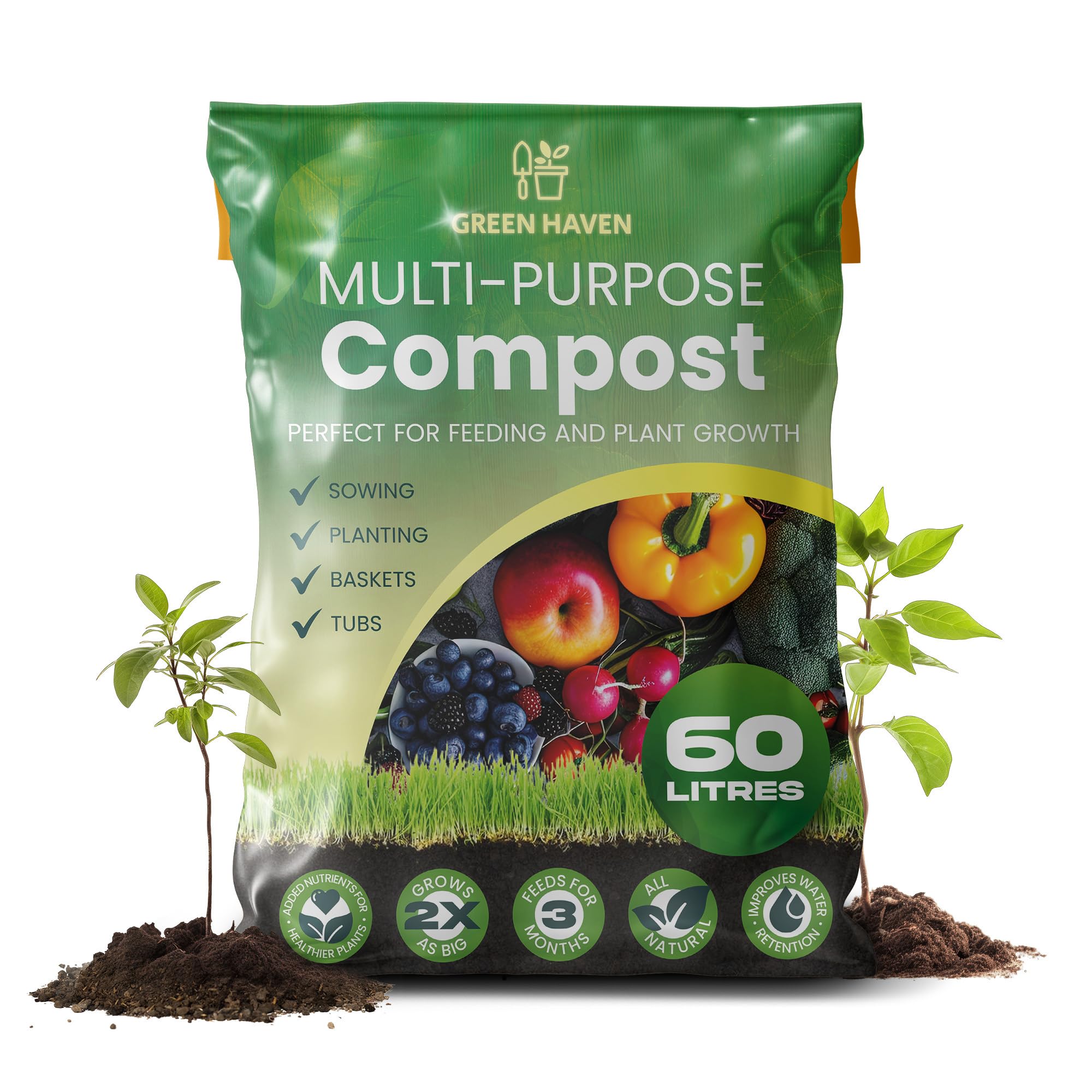
We recommend this compost for herb growers who want a peat-free, nutrient-rich mix that keeps roots happy and pots lighter to manage.
Pros
- Feels fine and blends easily into pots and seed trays.
- Holds moisture so we watered less between hot spells.
- Peat-free and clearly made from clean organic ingredients.
Cons
- A 60L bag is bulky to move once full.
- Not heavily charged with feed so very hungry herbs needed extra fertiliser later.
- Some dust when pouring into small planters.
We used this compost across trays, pots and a couple of raised beds and liked how quickly seedlings established. Rooting seemed faster than old bagged loam we had, and the soil texture stayed light rather than compacting.
For container herbs the moisture retention was a clear win. Plants looked vibrant without daily watering, though we did top up with a liquid feed after a few weeks for basil and coriander.
Handling was straightforward but the bag is large. We tipped it into a tub to avoid spillage and mixed in a small amount of grit for better drainage in terracotta pots.
How to grow better herbs with the right compost
We look for compost that matches herb needs. Nutrient balance matters; many herbs prefer moderate fertility rather than rich, heavy mixes.
Texture
We choose compost that drains well yet retains moisture. Sandy or loamy mixes suit Mediterranean herbs; peat-free blends with coir or composted bark work for most.
Nutrient Profile
We prefer compost with a gentle, balanced N-P-K ratio. Avoid high-nitrogen mixes that encourage foliage over flavour.
pH Level
Most culinary herbs like pH near neutral to slightly alkaline. Test pH if possible and choose compost that sits around 6.5 to 7.5.
Additives
Look for slow-release organic fertiliser and natural conditioners like well-rotted green waste. Avoid synthetic fertilisers and excess salts.
Certification and Labelling
We examine labelling for certification. Compost marked as composted or matured reduces risk of pathogens and nutrient lock-up. Organic or quality-assurance marks provide extra reassurance.
Packaging and Quantity
We assess packaging and quantity. Small bags suit pots and window boxes. Bulk or larger bags suit beds and many containers. Check weight and moisture to avoid surprises.
Sustainability
We weigh sustainability factors. Peat-free and recycled materials lower environmental impact. Locally produced compost reduces transport emissions.
Cost and Value
We compare cost against value when considering the best compost for herbs. Higher price can reflect better maturation and fewer contaminants. Balance budget with the compost’s texture, nutrients and sustainability credentials.
| Feature | Why It Matters |
|---|---|
| Texture | Drainage and root aeration |
| Nutrient balance | Flavour and plant health |
| pH | Nutrient availability |
| Additives | Slow feeding and structure |
| Certification | Safety and maturity |