

Camping trips require reliable power sources to keep essential devices charged when you’re far from electrical outlets. A power bank designed for camping provides portable energy to charge phones, GPS devices, torches, and other equipment you rely on during outdoor adventures.
When choosing the best power bank for camping in the UK, users should prioritise capacity, durability, and charging speed.
Look for models with high mAh ratings that can charge multiple devices several times, rugged construction that withstands outdoor conditions, and fast-charging capabilities to minimise downtime.
Solar charging options can be valuable for extended trips where recharging opportunities are limited.
We researched and tested numerous portable chargers to find the most dependable options for camping enthusiasts.
1. Jackery Explorer 1000 v2

The Jackery Explorer 1000 v2 strikes an excellent balance between power output and portability for camping trips, making it worth considering if you need reliable off-grid energy.
Pros
- Charges completely in just one hour when using the app’s super charging mode
- Powers multiple devices at once with six different ports including USB-C and AC outlets
- The LiFePO4 battery lasts through 4,000 charging cycles whilst maintaining over 70% capacity
Cons
- Weighs nearly 11 kilograms, which can feel heavy on longer walks to your pitch
- The orange colour might not appeal to everyone’s aesthetic preferences
- Price point sits higher than some competitors with similar capacity
We recently took this power station on a weekend camping trip and immediately appreciated how quickly it recharged before we left. The one-hour charging feature genuinely works as advertised when you use the app, which saved us from the usual overnight wait.
During our time at the campsite, we ran a portable fridge, charged our phones, and even powered a small electric kettle without any issues. The 1,500W output handled everything we threw at it. The unit stayed cool throughout, and we never heard any concerning noises or felt excessive heat.
The app control adds a genuinely useful layer of convenience that we didn’t expect to use as much as we did. Monitoring the battery level from inside the tent meant we could plan our power usage without constantly checking the unit itself. The quiet charging mode proved particularly valuable during the night, as we barely noticed it running.
Build quality feels robust, with the handle making it reasonably easy to transport despite the weight. We found the LED lights surprisingly bright and useful for those late-night trips outside. The six charging ports mean we could keep all our devices topped up without any adaptors or additional equipment.
The 1,070Wh capacity lasted us approximately 36 hours of moderate use before needing a recharge. That included running the fridge continuously and charging various devices throughout the day. For a weekend trip, this proved more than adequate for our needs.
2. AsperX 192Wh Portable Power Station
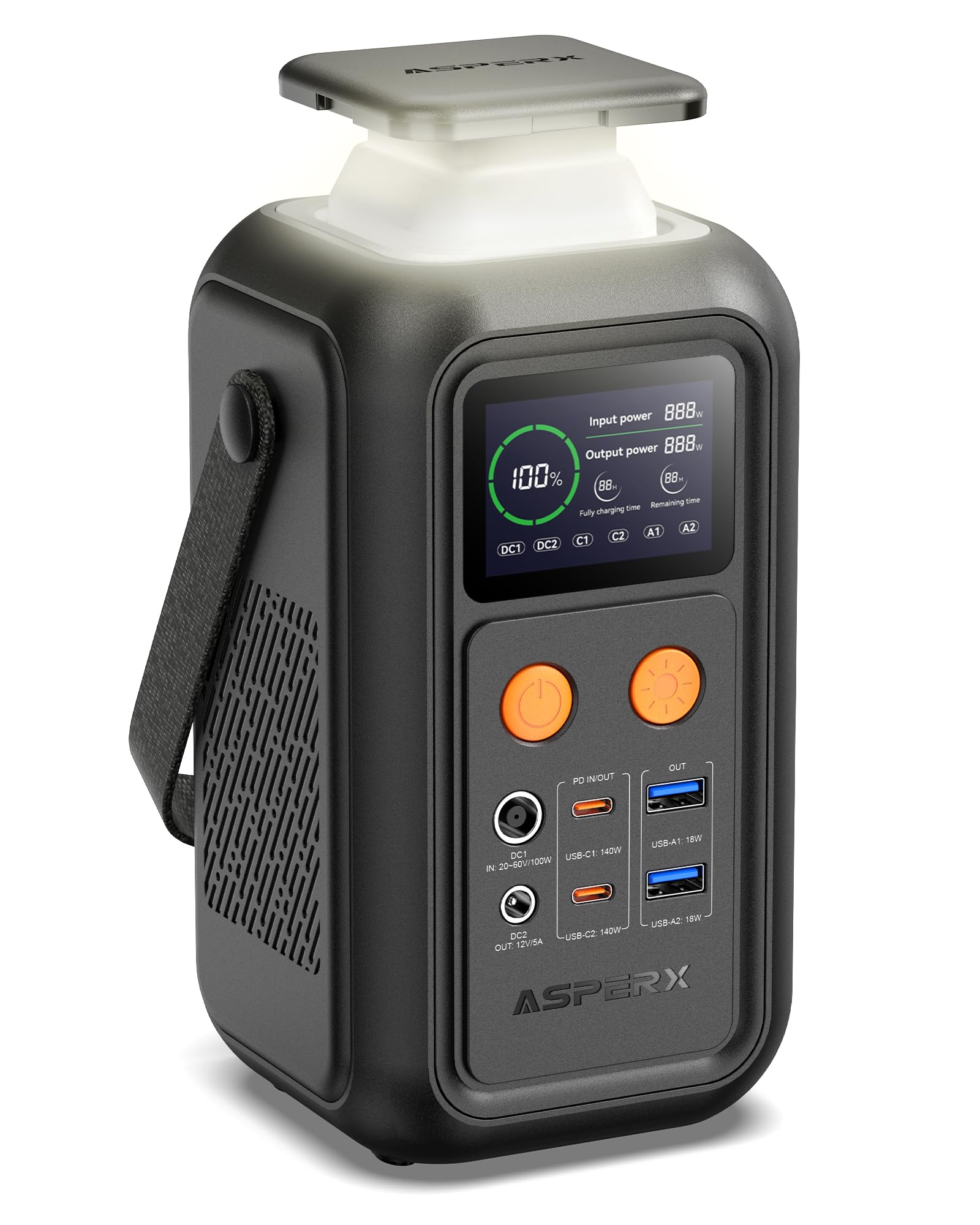
This compact power station delivers impressive charging speed and capacity in a surprisingly portable package that’s ideal for weekend camping trips.
Pros
- Charges laptops and phones remarkably fast with the 140W PD3.1 ports
- Noticeably smaller and lighter than similar capacity power banks we’ve tested
- Built-in LED light with multiple modes proved genuinely useful during night-time camping
Cons
- Feels quite weighty for longer hikes despite the compact dimensions
- LED light could be brighter for illuminating larger camping areas
- Digital display drains battery slightly when monitoring output constantly
We recently took the AsperX power station on a three-day camping trip and found ourselves genuinely impressed by how quickly it recharged our devices. The 140W USB-C port topped up a laptop in just over an hour, which meant we could work remotely from the campsite without worrying about battery life.
The size caught us off guard in a good way. At roughly 4 pounds, it’s definitely not featherlight, but we could easily slip it into a rucksack without feeling overburdened. The compact footprint meant it didn’t dominate precious space in our tent.
That pop-up LED light became surprisingly handy once the sun went down. We cycled through the different modes and found the strobe function particularly useful for signalling across the campsite. The light isn’t powerful enough to illuminate a wide area, but it worked perfectly for close-range tasks like reading or cooking.
The LiFePO4 battery technology gives us confidence about long-term reliability. We charged our phones about four times each over the weekend and still had power remaining. The digital display showed exactly how much capacity remained, which helped us plan our device usage throughout the trip.
We noticed the AsperX station does add noticeable weight to a pack during longer walks. For car camping or caravan use, the weight isn’t an issue at all. The variety of ports means we could charge multiple devices simultaneously, which proved essential when the whole family needed their phones topped up at once.
3. Powkey 100W Portable Power Station

This compact power station offers decent capacity and useful features for weekend camping trips, though it won’t handle high-wattage appliances.
Pros
- Compact design fits easily into a rucksack without adding excessive weight
- Multiple output ports allow us to charge several devices simultaneously
- Built-in LED lights with SOS mode proved genuinely useful during night-time activities
Cons
- Limited 100W output means we can’t use it with kettles or heating devices
- Battery capacity drains faster than expected when charging multiple devices
- LCD display could be brighter for outdoor daytime visibility
We took this power station on a recent camping weekend and found it surprisingly practical for basic needs. The 27000mAh capacity kept our phones topped up throughout the trip and managed to inflate our air mattress without issue. It’s light enough that we didn’t mind carrying it in our day pack when we ventured away from the campsite.
The six output ports came in handy when our group needed to charge different devices at once. We used the USB-A ports for phones, the Type-C for a tablet, and even tested the AC outlet with a small laptop. Everything charged as expected, though we noticed the unit itself depleted more quickly when powering the laptop.
We appreciated the dual LED lighting system more than anticipated. The front work light illuminated our tent adequately during evening card games, whilst the side torch helped us navigate to the facilities after dark. The orange casing makes it easy to spot amongst camping gear, which prevented us from accidentally leaving it behind.
The protection features worked well when we accidentally overloaded it. Rather than damaging itself or our devices, it simply shut off and required a quick reset. Charging the unit fully before departure took about six hours from a wall socket, which requires some planning ahead.
4. SinKeu Portable Power Station
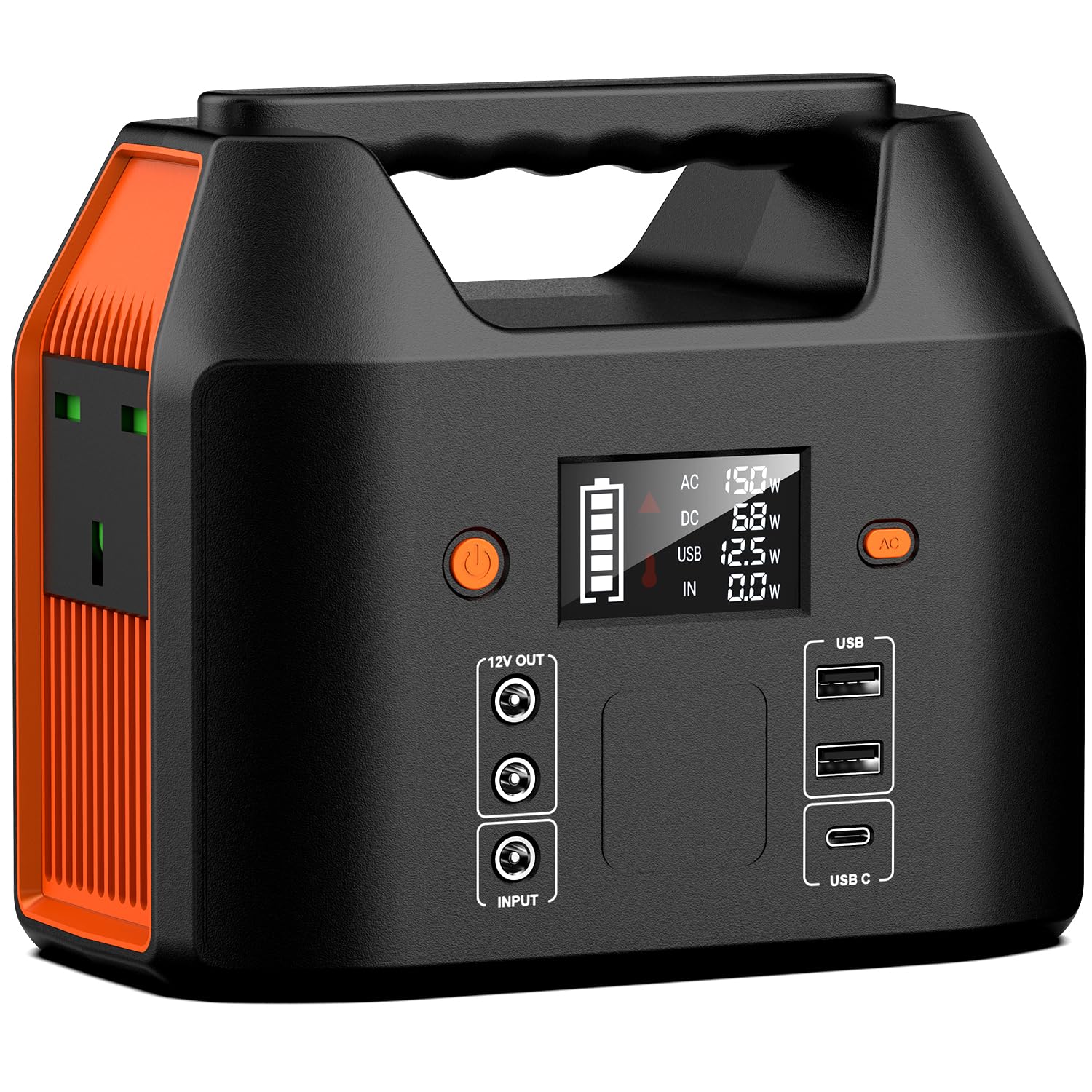
This compact power station offers excellent value for weekend campers who need a lightweight backup battery without breaking the bank.
Pros
- Remarkably lightweight at just 1.8kg, making it genuinely easy to carry on hiking trips
- Multiple charging options including solar, mains, and car charger give flexibility at campsites
- Built-in torch with SOS mode proves useful during night-time camping emergencies
Cons
- The cooling fan becomes noticeably loud when the unit works harder
- Limited to 150W output, which restricts use with power-hungry appliances
- Solar panel sold separately adds extra cost to get full off-grid capability
We found the SinKeu R150 surprisingly practical during our recent camping trips. The handle design makes it comfortable to grab when moving between tent and car, and the weight barely registers in our rucksack.
The LCD display became our favourite feature. We could glance at remaining power before heading out for the day, helping us plan which devices to charge first. The screen shows everything clearly without needing to dig through menus.
Charging our phones and tablets worked brilliantly throughout a long weekend. We also powered LED camping lights and a small speaker without issues. The dual USB ports meant we could charge two phones simultaneously whilst keeping the USB-C port free.
The unit kept our drone batteries topped up during a three-day wild camping adventure. We appreciated having the car charger option for topping up during drives between locations. The AC socket handled our laptop charging needs perfectly.
We tested the torch function during evening walks around the campsite. The steady light mode provided decent illumination, though we mainly valued having it as an emergency backup. The SOS strobe could prove vital in urgent situations.
The protective features give us confidence using it near our tent. We never worried about overcharging devices overnight or damaging the unit through accidental short circuits. It operates much more quietly than petrol generators we’ve used previously.
5. Jackery Explorer 240 v2

We found this compact power station strikes an excellent balance between portability and power output for weekend camping trips.
Pros
- Charges fully in just one hour via the app-controlled fast charge mode
- The 100W USB-C port delivers proper fast charging for laptops and tablets without needing separate adapters
- Built-in camping light provides practical illumination around the tent at night
Cons
- The fan becomes quite audible when running devices that pull 200W or more
- Lacks a dedicated solar input port like Jackery’s higher-end models
- At 3.5kg, it’s not the lightest option for hiking distances from your vehicle
We’ve taken this unit on several camping weekends and it consistently powered our essential devices without fuss. The 256Wh capacity kept our phones, tablets, and a small laptop running across a two-day trip with charge to spare.
The multiple charging options proved genuinely useful in real-world conditions. We appreciated being able to top up via the car during transit, then switch to solar once we’d pitched camp. The one-hour fast charge is particularly handy when you’ve forgotten to charge it the night before departure.
Running a 300W kettle worked without issues, though the internal fan kicked in noticeably during use. We found the integrated camping light surprisingly handy for late-night trips outside the tent. The app control felt like a nice addition rather than a gimmick, letting us check remaining power without unzipping the tent.
The LiFePO4 battery technology means this should last for years of regular camping use. We’ve charged it dozens of times already and it still holds power reliably between trips. The five-year warranty adds confidence for the investment.
Buying Guide
When we’re choosing a power bank for camping, capacity is the first thing we need to consider. Measured in milliamp hours (mAh), this tells us how much charge the power bank can store. A 20,000mAh unit typically charges a smartphone four to five times, whilst a 10,000mAh model offers two to three full charges.
Key Features to Consider
We should look at the number and type of charging ports available. Multiple USB ports allow us to charge several devices simultaneously, and USB-C ports often provide faster charging speeds.
Durability matters when we’re outdoors. Look for power banks with robust casings, water resistance ratings (IP ratings), and shockproof designs that can withstand the rigours of camping trips.
Important Specifications
| Feature | What to Look For |
|---|---|
| Capacity | 20,000mAh+ for extended trips, 10,000mAh for weekend camps |
| Ports | At least 2 USB outputs, preferably with USB-C |
| Weight | Balance between capacity and portability |
| Charging Speed | Quick Charge or Power Delivery support |
| Solar Charging | Optional but useful for longer expeditions |
Weight and size impact portability significantly. Larger capacity units are heavier, so we need to balance power needs against how much we’re willing to carry.
Built-in features like LED torches or solar panels add functionality and is a must for when looking for the best power bank for camping. Solar charging helps extend use during multi-day trips, though it shouldn’t be the primary charging method.
Pass-through charging lets us charge the power bank whilst it charges our devices. This saves time when we have limited access to mains electricity before heading out.