

Peat free compost has become a go-to choice for gardeners who want healthy plants without damaging peat bogs. It delivers the same basic benefits as traditional compost: improved soil structure, better moisture retention and added nutrients.
The best peat free compost balances drainage and water retention while providing a stable nutrient mix that supports seedlings, containers and borders.
When choosing peat free compost, pay attention to the ingredients, texture and intended use. Look for composts formulated for specific tasks such as seed sowing, potting or general garden use, and check for added fertilisers or slow-release nutrients. We tested and compared a range of peat free composts to recommend options that perform reliably across different gardening needs.
Best Peat Free Compost for Superior Growing
Below is our full list of the best peat free compost. We tested options for seed sowing, potting and garden beds to find reliable, eco friendly choices. Our picks balance performance, sustainability and value.
1. Green Haven 60L Multi-Purpose Compost
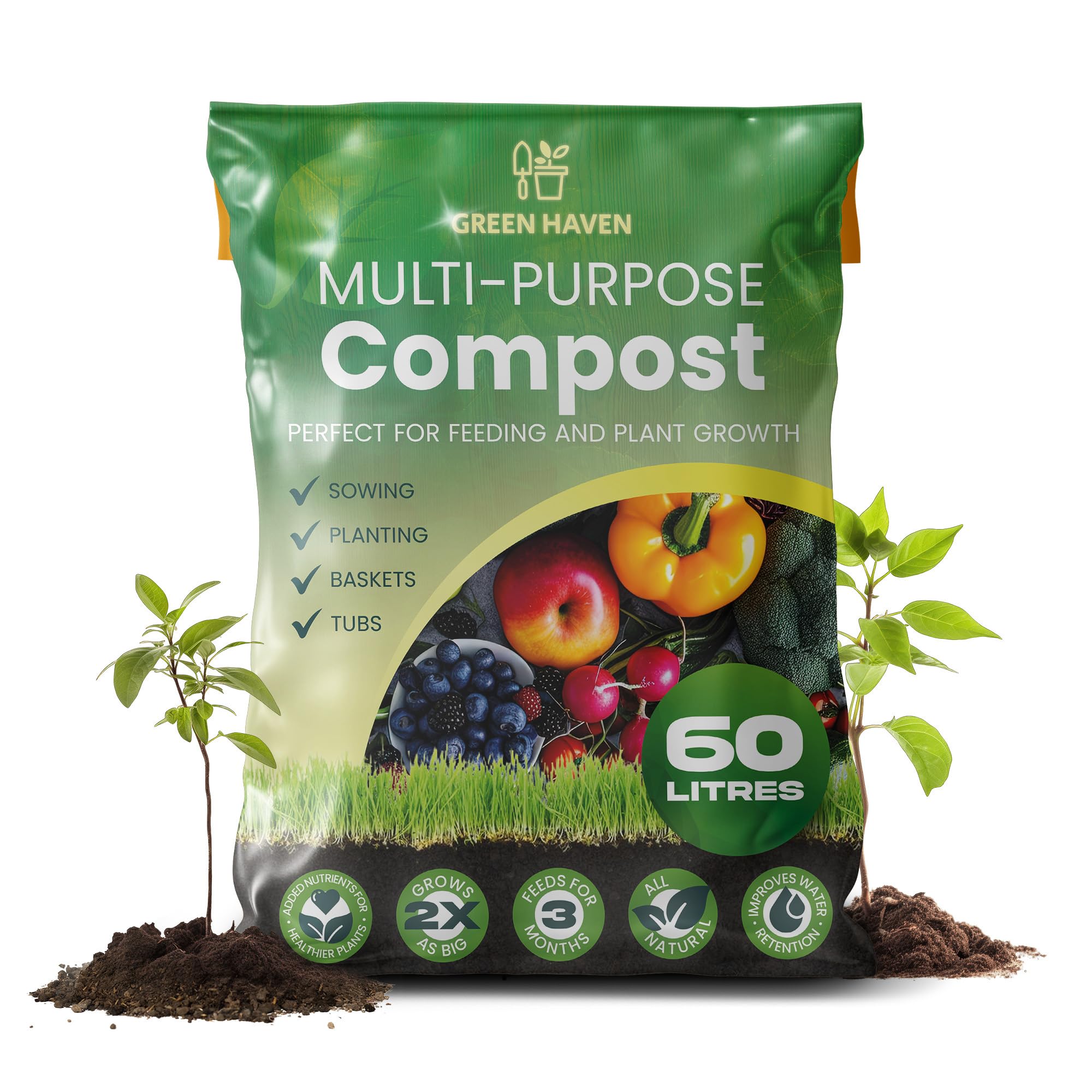
We would buy this if you want a peat free, ready-to-use compost that keeps containers moist and helps plants establish quickly.
Pros
- Feels fine and well blended, easy to fill pots and seed trays.
- Holds moisture without becoming soggy, so we watered less often.
- Clearly nutrient-rich; plants stood up well after transplanting.
Cons
- The 60L bag is bulky to move if you have no trolley.
- Slightly pricier than basic composts, though quality justifies it.
- Not ideal if you want a completely bark-free mix for seeds.
We used this compost across containers and a couple of raised beds and noticed faster root establishment. Seedlings in our trays pushed through soil more evenly than with our older mixes.
The texture is pleasantly fine, which made filling hanging baskets easy and reduced air pockets around roots. It also drains well, so we did not see waterlogging after heavy rain.
Moisture retention stood out during a dry spell. Pots stayed hydrated longer and spring watering felt less urgent.
Nutrients seemed balanced; leaf colour stayed healthy and flowering plants produced good blooms. We did top up with a light feed later in the season for heavy feeders.
Moving a full 60L bag was the main hassle for us, especially up steps. Expect to need help or a wheelbarrow if you buy several.
Overall, it suits gardeners who want an eco-friendly, peat free compost that performs well in pots and beds without extra mixing.
2. Miracle-Gro PEAT FREE Premium All Purpose Compost, 20L
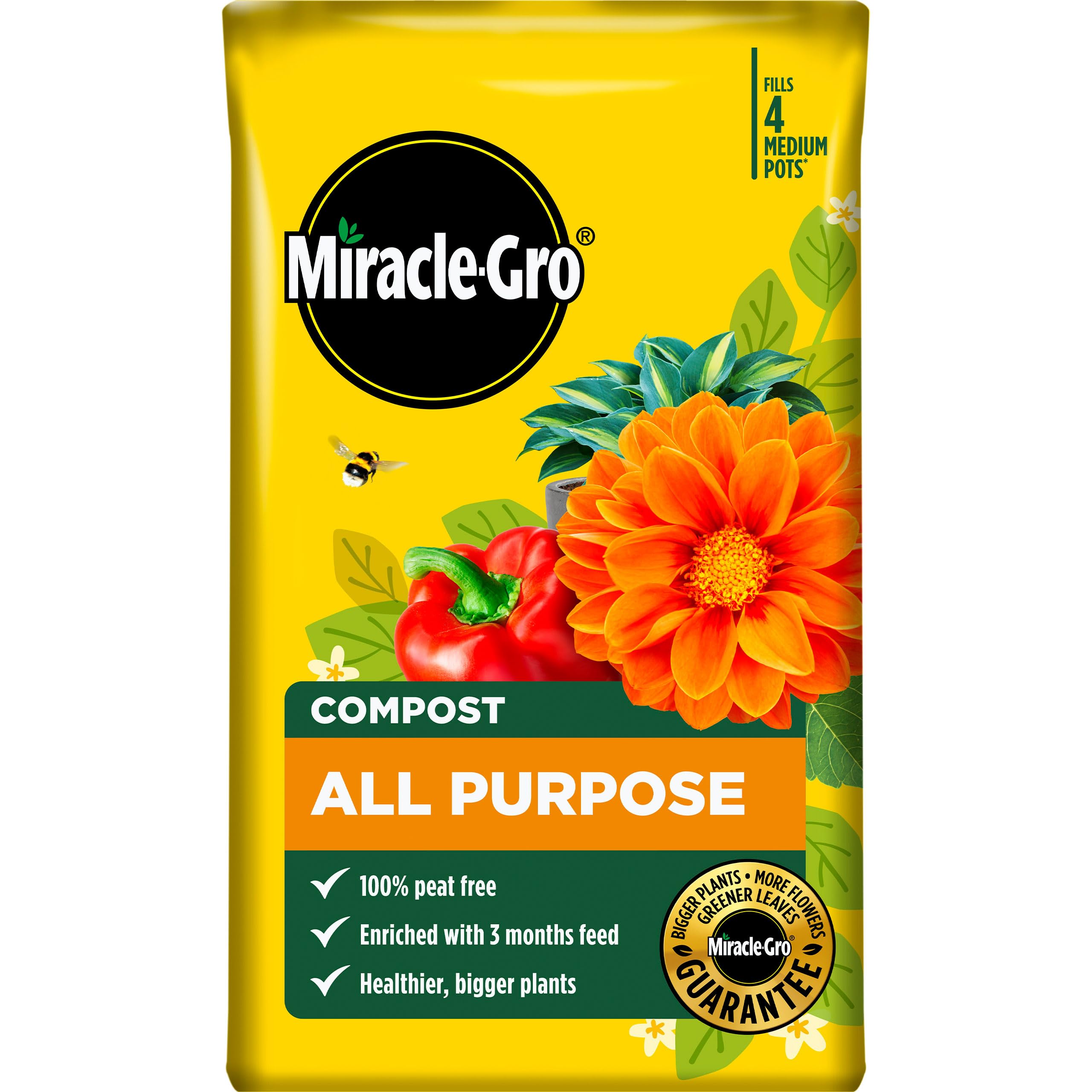
We would recommend this compost for gardeners who want a ready-to-use peat free mix that feeds plants for weeks and keeps water balance steady.
Pros
- Feeds plants for up to three months without extra effort.
- Feels light and holds moisture well thanks to fibre technology.
- Versatile for pots, baskets, borders and vegetable patches.
Cons
- The 20 litre bags are heavy to move alone.
- Some users may notice small debris or occasional stones.
- Can attract midges if stored damp or left open.
We used this in tubs and hanging baskets and saw new seedlings perk up quickly. The smart release feed seemed to keep growth steady without extra liquid feed for a few weeks.
Mixing was unnecessary so planting felt straightforward. The texture balances air and water well, which reduced overwatering worries.
Carrying a full bag required a second pair of hands. We also found it pays to store the opened bag in a dry place to avoid insects or damp smells.
Overall, this is a convenient peat free option that suits mixed garden uses and beginners who want a low fuss compost.
3. Miracle-Gro PEAT FREE Premium All Purpose Compost, 75L
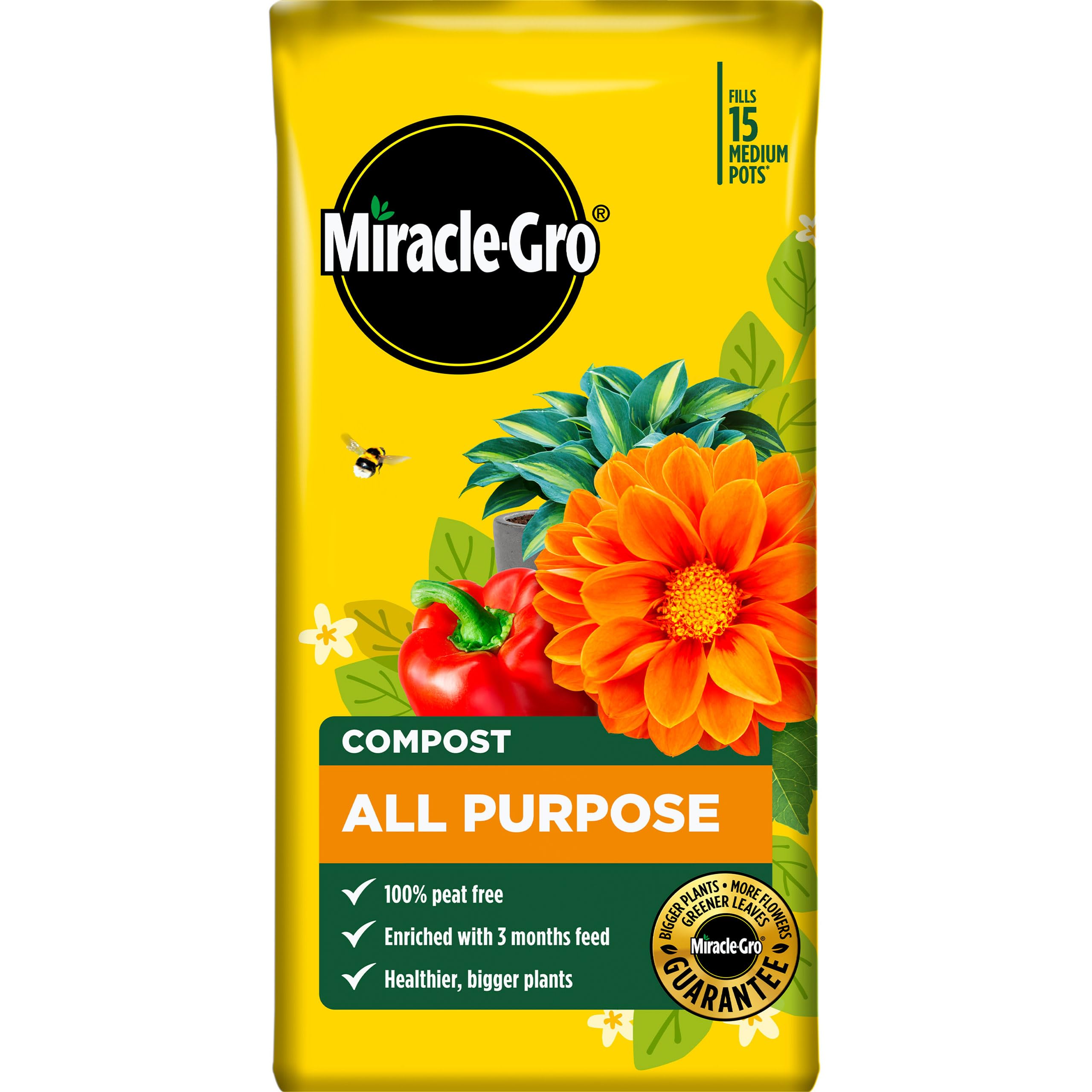
We recommend this if you want a ready-to-use, peat free compost that supports a range of plants with built-in feed.
Pros
- Ready to use straight from the bag, no mixing needed.
- Feeds plants for up to three months with consistent moisture control.
- Light and airy feel thanks to fibre tech, good for pots and hanging baskets.
Cons
- Very heavy to move when full; one person may struggle.
- Occasional debris and small stones in the bag.
- Can attract small gnats if left open or stored damp.
We used this compost across pots, tubs and a veg patch and noticed quick improvements in plant vigour. Seedlings and repotted houseplants perked up within a couple of weeks. The smart release feed seemed to keep colour and growth steady without extra liquid feed.
Handling a 75 litre bag takes planning. We tipped it into a wheelbarrow and filled pots from there. The texture felt balanced; not too dense and it drains well while holding enough moisture for young roots.
For containers and hanging baskets it performed reliably. Flowers opened well and we did not see waterlogging. Keep the bag sealed and off the ground to avoid gnats and check for any stones when potting on.
4. Munnie 60L Multi-Purpose Compost

We would buy this if you want a peat-free mix that germinates seeds well and suits both pots and garden patches.
Pros
- Lightweight and easy to handle for pots and seed trays.
- Moisture-retentive thanks to added vermiculite, so seedlings stay happier.
- Eco-friendly bag and peat-free mix, which feels better for long-term use.
Cons
- Slightly moist on delivery, so it can compact if left closed.
- Not as nutrient-rich as specialist feeds for heavy feeders.
- Bag size needs space to store if you buy several.
We used this compost to repot houseplants and top up a couple of window boxes. The texture felt fine and crumbly, making it simple to work with small root balls. Seed germination was brisk and even in our tests.
Our plants showed steady growth over a few weeks. Rooting seemed encouraged and pots stayed damp longer between waters. For heavy feeders like tomatoes we added some extra feed, but most ornamentals benefited straight away.
Handling the bag was straightforward and the plain packaging appealed to us. It packed down a little after a few days, so we fluffed it before use. Overall, this is a reliable peat-free option for gardeners who want an easy, general-purpose compost.
5. Miracle-Gro Peat Free 40L

We recommend this if you want an easy-to-handle, peat-free all-purpose compost that feeds plants for weeks.
Pros
- Feels light and friable, so planting and potting required little effort.
- Retains moisture well thanks to coir, so less frequent watering.
- Contains fibre for good aeration which helped seedlings establish.
Cons
- Bag size is bulky to store if you have limited space.
- Local recycling rules may reject the packaging.
- Some delivery issues reported by other buyers.
We used this compost across pots and a vegetable patch and found it performs like a classic all-rounder. Seedlings pushed through quickly and roots looked healthy when we repotted.
Handling a 40 litre bag was straightforward even for one of us. The texture stayed consistent and it didn’t compact, so drainage remained reliable in containers.
Nutrients lasted around a month, matching the up-to-6-week claim, before we added a light feed. Overall, it saved time and kept plants vigorous without peat.
Why Use Peat Free Compost
Peat bogs are precious ecosystems that take thousands of years to form. They store vast amounts of carbon and provide habitats for rare plants, insects and birds.
When peat is extracted for compost, these habitats are destroyed and stored carbon is released into the atmosphere, contributing to climate change.
The UK government has committed to phasing out peat in horticulture, and many garden centres now prioritise peat free alternatives.
By choosing peat free compost, we help protect these irreplaceable wetlands while still giving our plants what they need to thrive.
Modern peat free composts have improved significantly in recent years. Manufacturers use sustainable ingredients like coir, composted bark, wood fibre and green waste to create mixes that rival traditional peat-based products.
Many gardeners find peat free options perform just as well for seed sowing, potting and general planting.
Switching to peat free compost is one of the simplest changes we can make to reduce our environmental impact in the garden. It supports sustainable forestry, reduces carbon emissions and helps preserve some of the most important carbon sinks on the planet.
We have tested the best peat free composts listed above and found them reliable for everyday gardening tasks. With a little adjustment to watering habits and the occasional supplementary feed, they deliver healthy plants without compromising the environment.