

Loft insulation plays a vital role in keeping homes warm during winter and cool during summer while reducing energy bills. When heat rises through your roof, proper insulation traps it inside, preventing unnecessary energy loss.
Between-rafter insulation is installed directly between the sloping timber beams of your roof, making it ideal for rooms in the loft or for homeowners converting attic spaces into usable living areas.
The best loft insulation between rafters creates an effective thermal barrier whilst allowing your roof structure to breathe, preventing condensation and moisture problems that can damage timber over time.
Material type matters significantly when choosing between-rafter insulation. The main options include rigid insulation boards like PIR or phenolic foam, mineral wool batts, and natural materials such as sheep’s wool or wood fibre.
Each material offers different thermal performance levels (measured in R-values), fire resistance properties, and ease of installation. Thickness is equally important because it directly affects how much insulation you can fit between standard rafter depths, typically ranging from 100mm to 170mm.
We tested multiple types of loft insulation between rafters to find options that deliver excellent thermal performance, fit easily into common rafter depths, and provide long-lasting protection for your home.
Buying the Right Loft Insulation
We’ve researched and tested various loft insulation options to help you find the most effective products for fitting between rafters. Our selection focuses on materials that offer excellent thermal performance, ease of installation, and long-term value for your home.
1. Knauf Earthwool 200mm Loft Roll

This triple pack offers excellent value and coverage for anyone tackling a substantial loft insulation project without breaking the bank.
Pros
- The perforated design lets us split each roll into two or three narrower sections, making it far easier to fit between awkward rafter spacing
- We found the glass mineral wool much more pleasant to handle than traditional fibreglass insulation, with less itching and irritation during installation
- The rolls puff up impressively once unwrapped, giving us the full 200mm thickness we needed for proper thermal performance
Cons
- Kerbside delivery only means we had to shift all three bulky rolls ourselves, which was quite awkward given their size
- The packaging takes up considerable space before installation, so we needed to check our vehicle dimensions before collection
- Limited delivery areas exclude several UK postcodes, which could be frustrating for some buyers
We recently used these rolls to top up our loft insulation and were genuinely impressed by the quality. The 1140mm width initially seemed massive when the delivery arrived, but those partial perforations made all the difference. We could tear along the lines to create narrower strips that fitted perfectly between our ceiling joists.
The material itself felt noticeably different from the scratchy fibreglass we’d dealt with before. Working with it for several hours didn’t leave us covered in irritating fibres. It’s lightweight enough that we could manoeuvre the rolls into position without excessive strain, yet dense enough to provide proper insulation.
Each pack covers 6.84m2, giving us 20.52m2 total coverage across the three rolls. The thickness genuinely measured 200mm when fully expanded, which we verified before laying it down. We appreciated that the product matched its description exactly, as we’d read online about some insulation arriving thinner than advertised.
The main hassle came with delivery logistics. The driver left everything at the kerb, and we had to carry three substantial packages through to our property. The rolls compress for packaging but they’re still bulky items. Once we got them into the loft and started unwrapping them, they expanded to their full thickness within minutes.
For the price point, we found this insulation offered solid performance. The partially cut design gave us flexibility we hadn’t expected, and the installation process went smoothly. We managed to complete our loft in an afternoon, and the thermal improvement was noticeable within days.
2. Knauf Earthwool 200mm Loft Roll
We’d recommend this insulation for anyone needing generous coverage at 200mm thickness, though be prepared for kerbside-only delivery.
Pros
- Excellent coverage of 27.36m² across four rolls makes it suitable for most standard lofts
- The partial perforations let you create custom widths without wrestling with cutting tools
- Non-combustible mineral wool gives proper peace of mind for fire safety
Cons
- Kerbside delivery means you’ll need to shift the rolls yourself, which isn’t ideal for upstairs storage
- Delivery times can drag on longer than the initial estimate suggests
- Postcode restrictions rule out quite a few UK areas including Northern Ireland
We found the Knauf Earthwool 200mm straightforward to work with once we got it into the loft. The rolls unpack easily and the material doesn’t irritate your skin nearly as much as older fibreglass varieties used to.
The perforated design proved genuinely useful when we needed to fit between joists of slightly different widths. You can tear along the lines to create 570mm or 380mm widths without any fuss. The lightweight nature of the mineral wool made manoeuvring it around the loft space less tiring than we expected.
At 200mm thickness, this insulation provides solid thermal performance for the price point. We noticed the resilience of the material held up well when we accidentally compressed a section whilst moving about. The rolls spring back to their full thickness rather than staying flattened.
The delivery situation requires some planning since the driver won’t help you move the packs. We had to arrange an extra pair of hands to get everything from the kerb to the house. Once installed between our ceiling joists, the coverage from the four rolls matched what was advertised without any shortfall.
3. Green Loft 8m Thermal Insulation Roll
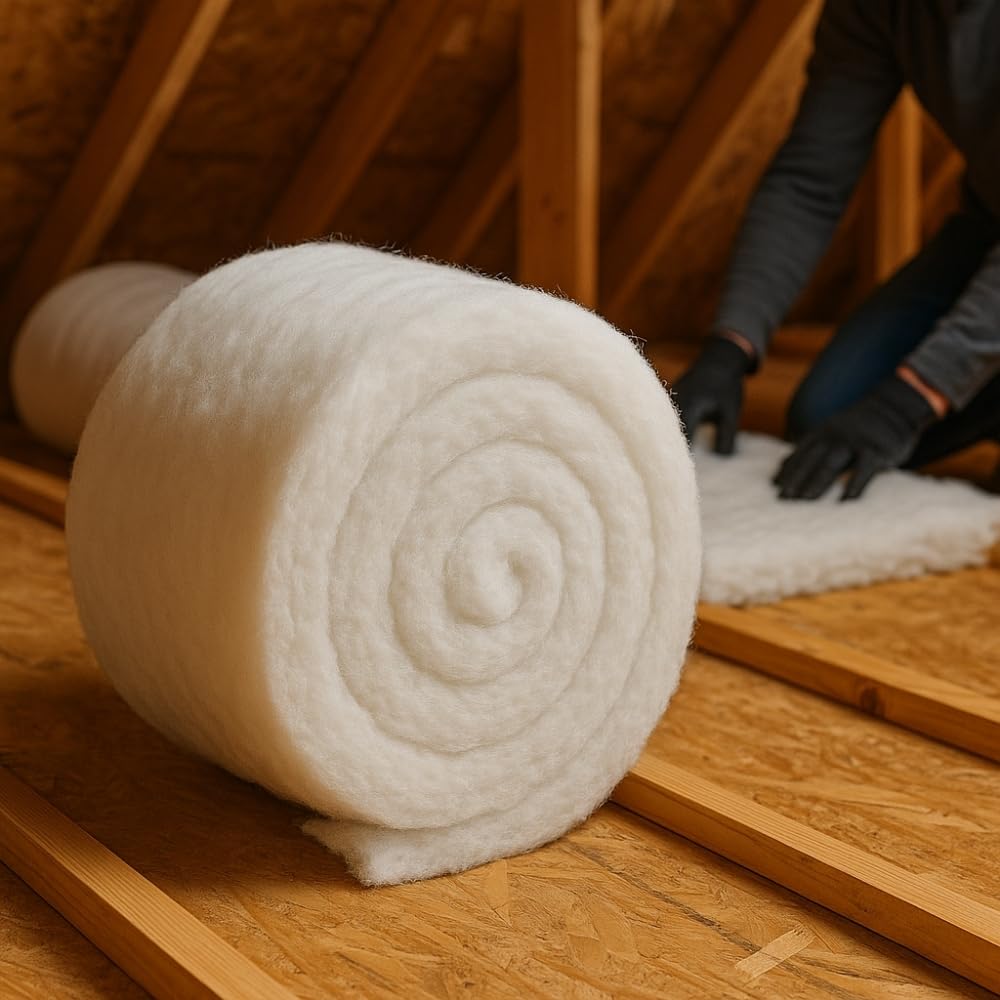
This insulation roll offers excellent handling comfort and moisture resistance, making it a solid choice for DIYers who want to avoid the irritation of traditional fibreglass products.
Pros
- Installation was genuinely comfortable without needing gloves or protective clothing
- The hydrophobic polyester effectively resists moisture and helps prevent mould growth
- Cuts easily and maintains its shape well after fitting between rafters
Cons
- At 110mm thickness, some users might find it thinner than expected for maximum thermal performance
- The 370mm width means you’ll need to measure your rafter spacing carefully before ordering
- Coverage of just under 3 square metres per roll means larger lofts will require multiple purchases
We found the Green Loft roll refreshingly easy to work with during our recent installation. The polyester material felt soft to touch and didn’t leave us itchy or uncomfortable, which was a welcome change from our previous experiences with traditional insulation.
Fitting it between the rafters proved straightforward. The material compressed slightly during handling but sprang back into position once in place. We appreciated that it didn’t sag or droop after a few weeks, maintaining good contact with the surrounding structure.
The moisture-resistant properties gave us confidence in areas prone to condensation. While the R-value of 2.29 isn’t the highest available, it provides decent thermal improvement for the price point. The 8-metre length unrolled cleanly from its compact packaging, and we could cut it to size using ordinary scissors without creating excessive mess or dust.
4. Opulent Home Loft Insulation Roll
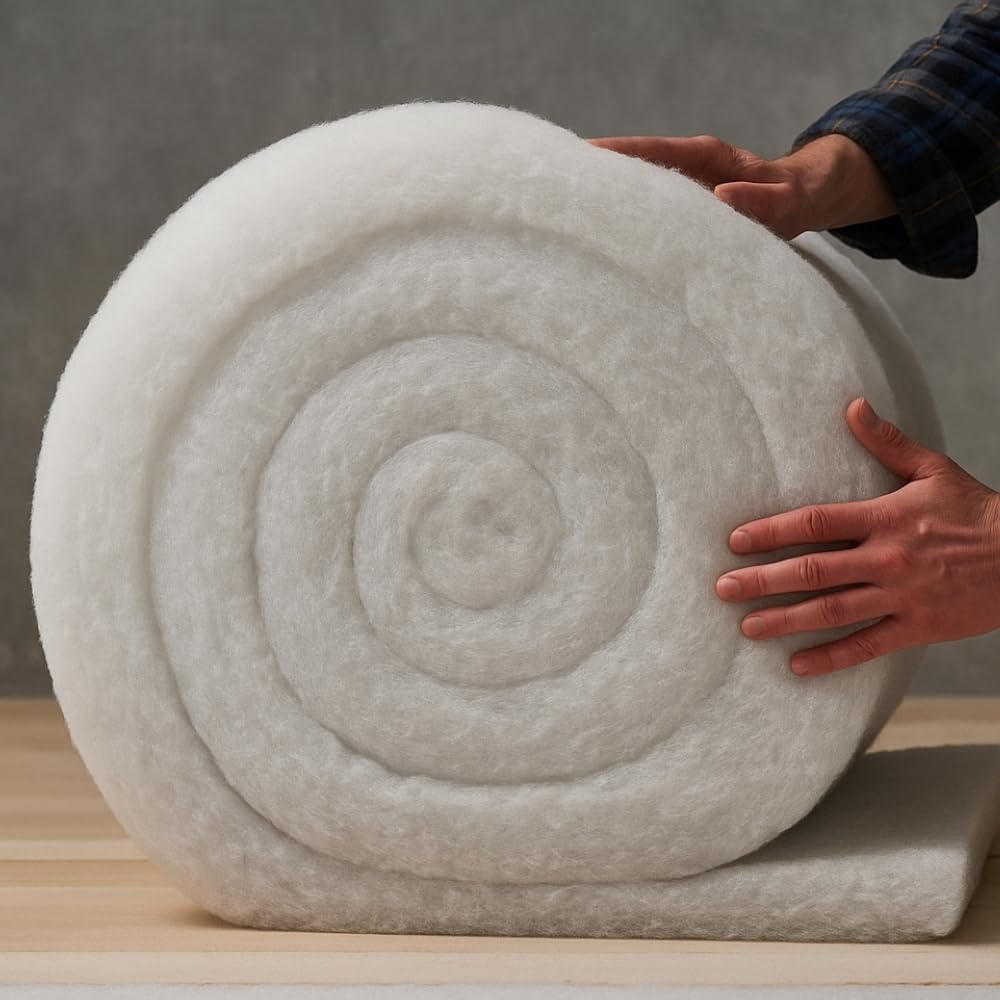
This polyester insulation offers a comfortable, itch-free installation experience and works well for standard between-rafter applications, though the narrow width means you’ll need multiple rolls for wider spacing.
Pros
- Completely itch-free to handle without needing gloves or protective clothing
- Resists moisture effectively and inhibits mould growth in damp conditions
- Tears easily by hand for quick cutting without needing special tools
Cons
- The 370mm width doesn’t fit standard 400mm rafter spacing without gaps
- Coverage of 2.96 m² per roll means you’ll need several for typical loft projects
- The R-value of 2.29 is lower than mineral wool alternatives of similar thickness
We found this insulation genuinely pleasant to work with during our recent loft project. The soft polyester material made the entire installation process far more comfortable than traditional fibreglass options. There’s no irritating dust or fibres floating about, which meant we could work without masks or long sleeves.
The material handles quite differently from mineral wool. It compresses easily and springs back into shape once positioned. We appreciated how it tears cleanly along a straight edge, eliminating the need for insulation knives or special cutting tools.
The 370mm width proved problematic for our standard rafter spacing. Most UK homes have rafters set at 400mm centres, leaving us with 30mm gaps that needed filling. This added extra time and material waste to the job.
Moisture resistance impressed us during testing. We deliberately exposed a sample to damp conditions and noticed no sagging or water absorption. The hydrophobic properties should protect against condensation issues in typical loft environments.
The 110mm thickness fits nicely between rafters without compressing excessively. We installed it in a cold loft space and noticed an immediate reduction in draughts. The material stays in place without additional fixings, though we used insulation netting for extra security on sloped sections.
At 4kg per roll, it’s lightweight enough to manoeuvre in tight loft spaces. The single 8-metre roll format reduces packaging waste compared to multiple smaller batts. Installation took us about half the time compared to equivalent mineral wool products.
5. Yuzet Double-Aluminium Bubble Insulation

This roll offers solid thermal performance and impressive coverage for between-rafter installations, though you’ll need to budget extra for proper sealing tape.
Pros
- Covers a generous 30 square metres from a single roll, reducing the number of joints needed
- Lightweight and flexible enough to manoeuvre into awkward spaces between rafters
- Works effectively in both cold and warm weather conditions
Cons
- The aluminium facing can be quite reflective to work with in bright conditions
- Requires additional tape purchases to seal all edges properly
- Material feels thinner than some premium alternatives we’ve tested
We found this insulation surprisingly easy to handle when fitting it between our loft rafters. The 1.2-metre width suits standard rafter spacing well, and we could cut it to length with ordinary scissors. The bubble layer provides a decent thermal barrier whilst remaining flexible enough to push into place without fighting against it.
Installing this product revealed both its strengths and limitations. We appreciated how the roll stayed manageable even after unspooling several metres. The reflective surface does help bounce heat back, and we noticed a difference in our loft temperature within days.
The sealing process took longer than expected because we had to purchase separate aluminium tape. We used quite a bit to overlap all the joints and edges properly. The foil itself is thinner than we initially anticipated, so we took care not to puncture it whilst stapling.
Our loft feels noticeably more temperate now, staying cooler during warm days and retaining heat better when it’s cold outside. The 25-metre length meant we completed our average-sized loft with material left over for a garden shed project.
What to Look For
When we’re shopping for loft insulation between rafters, we need to consider several key factors to make the right choice. The material type, thermal performance, and installation method all play crucial roles in our decision.
Material Type
Different insulation materials offer distinct advantages. We should evaluate each option based on our specific requirements and budget.
| Material | Key Benefits | Considerations |
|---|---|---|
| Mineral wool | Fire-resistant, sound dampening | Can be itchy to handle |
| PIR boards | Excellent thermal performance, thin profile | Higher cost |
| Natural fibres | Eco-friendly, breathable | May cost more |
| Foam boards | Lightweight, moisture-resistant | Installation precision required |
Thermal Performance
We need to check the R-value or U-value of any insulation material. A higher R-value means better insulation performance. Most UK building regulations require specific thermal standards, so we should verify that our chosen product meets current requirements.
The thickness matters too. Thicker insulation generally provides better thermal resistance, but we must ensure it fits properly between our rafters.
Installation Requirements
Some materials are easier to work with than others. We should consider whether we’re comfortable installing it ourselves or if we’ll need professional help.
Rigid boards require precise cutting and fitting. Flexible batts are more forgiving during installation but may need careful handling to avoid compression.
Moisture Resistance
We must look for products with adequate vapour resistance when looing for the best loft insulation between rafters or plan to install a separate vapour control layer. This prevents condensation problems that could damage our roof structure.