

Vegetable gardeners rely on rich, well-structured compost to boost yields, improve soil texture and feed plants through the season. Compost for vegetables can range from basic backyard leaf compost to commercial blends enriched with worm castings or balanced NPK amendments, and choosing the right type affects how quickly nutrients become available and how well the soil retains moisture.
The most important factors to check are nutrient balance, level of decomposition, and whether the compost is free of weed seeds and contaminants.
Choose a compost for vegetables that is mature, low in salts, and labelled for edible crops to avoid burning seedlings and to ensure safe, steady feeding.
Our testing focused on those qualities to identify the best options for home vegetable beds and containers.
Best Compost for Growing Vegetables
We chose composts that feed vegetable beds, improve soil structure and support steady plant growth. Our list covers different soil types, budgets and organic options so you can pick what suits your garden.
1. Miracle-Gro Peat Free Veg & Fruit Compost
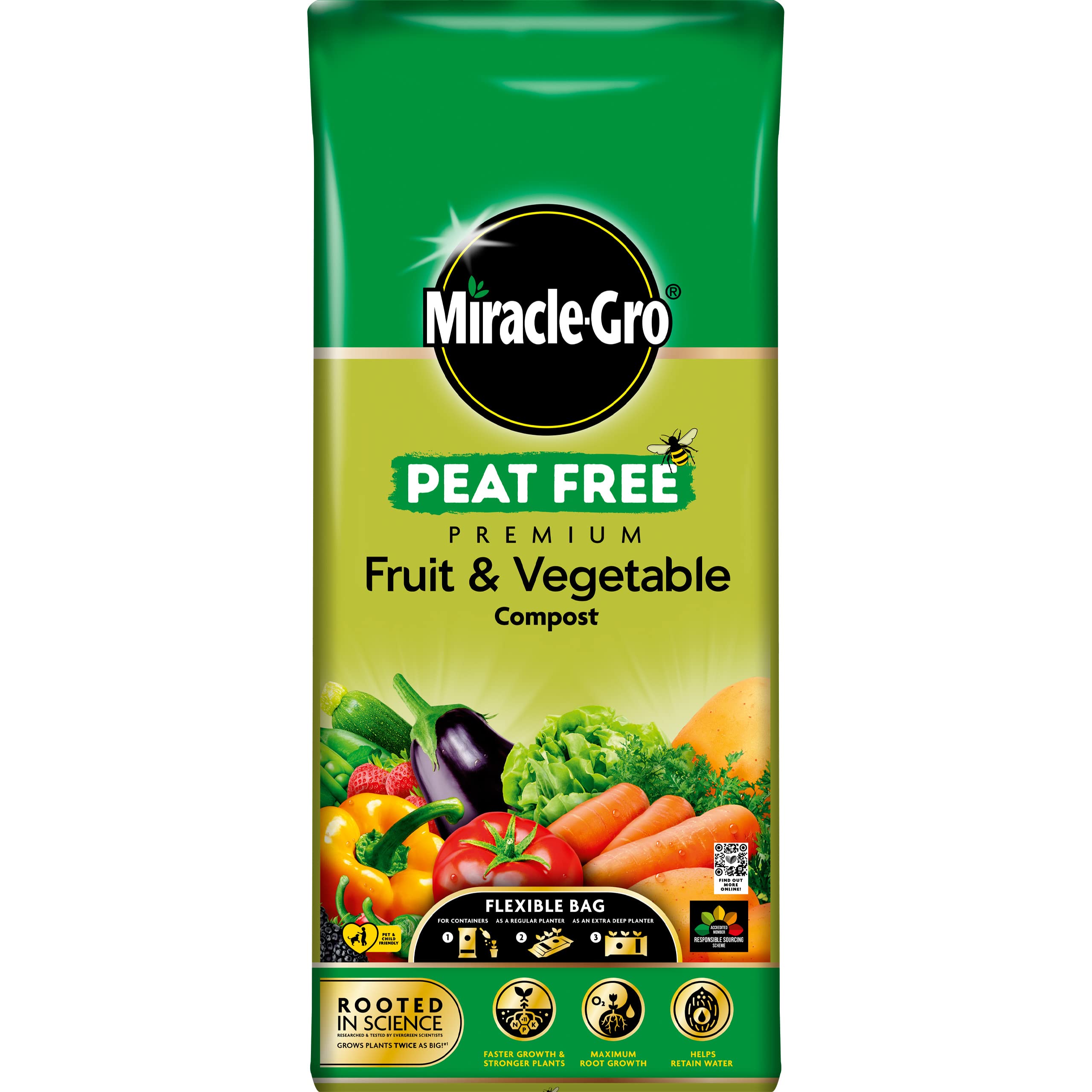
We would buy this compost for containers and greenhouse seedlings because it gives consistent moisture and a good structure without peat.
Pros
- Retains water well so pots stay evenly moist.
- Good texture and air balance for strong root growth.
- Peat free and easy to stack in the shed.
Cons
- Can arrive very moist and heavy to lift when full.
- Some bags contain small insects on arrival.
- Not the cheapest option per litre when not on sale.
We used this in containers and seed trays across a few seasons and liked the feel. The coir keeps the mix light while holding water, so seedlings did not suffer from short dry spells.
Our tomatoes and lettuce established quickly and roots looked healthy when repotting. Fibre Smart seemed to keep compost from compacting, which helped drainage in small pots.
The bag functions as a flexible planter, so we tried it as a quick grow bag and it worked fine for summer crops. Expect a heavy carry and inspect the bag; we found the odd bug but no lasting problems.
2. Pelle & Sol 60L Multi Purpose Compost

We would buy this compost for most vegetable pots because it feeds plants well and holds moisture without going soggy.
Pros
- Feels crumbly and easy to work with for potting and repotting.
- Keeps moisture steady thanks to vermiculite, so seedlings do well.
- Versatile for indoor pots and outdoor beds.
Cons
- Bag weight can make handling awkward for some gardeners.
- Delivery and bag volume have occasional inconsistencies.
- Not specifically tailored for heavy feeders without extra feed.
We used a 60 litre bag across pots and a small raised bed and liked how quickly seedlings established. Roots seemed to push through the mix cleanly and watering felt more consistent than with plain composts.
When transplanting peppers and tomatoes the compost retained enough water between feeds without staying waterlogged. We did add a little extra feed later in the season for larger fruiting plants.
Carrying full bags upstairs was tiring, and one delivery arrived short of the claimed volume. Despite that, the texture and results made it a practical choice for most vegetable growers.
3. Growmoor Multi-Purpose Compost

We would buy this for reliable, easy-to-use compost that helps vegetable seedlings and containers get off to a strong start.
Pros
- Fine, clean texture that makes sowing and potting straightforward.
- Holds moisture well so plants stay evenly watered without becoming waterlogged.
- Nutrient-enhanced mix seems to boost early growth in seedlings and young plants.
Cons
- Price is higher than basic supermarket composts.
- Bags can arrive slightly torn in transit.
- Contains fertiliser so needs caution around children and pets.
We used this compost for a small raised bed and several pots. The texture felt light and free of large debris, which made sowing seeds simple and untidy-free.
Our seedlings pushed through faster than with the cheap compost we had before. Roots went into the mix with no resistance and the plants showed steady early growth.
Moving the 60 litre bags was manageable because the compost was not waterlogged. A torn bag meant a quick tidy-up, but we did not lose any compost.
We noticed the improved moisture retention when hot spells hit. Waterings stayed less frequent and young veg maintained steady leaf colour and vigour.
Watch children and pets around freshly filled containers because the product contains added nutrients. We kept bags sealed and stored them out of reach until we used them.
4. Hardys 60L Multi Purpose Compost

We recommend this for veg gardeners who want an easy, reliable compost that helps seedlings and pots establish quickly.
Pros
- Crumbly texture that makes sowing and potting straightforward.
- Holds moisture without staying waterlogged.
- Feels nutrient-rich and supports steady root growth.
Cons
- Bag is bulky to move once full.
- Not specially formulated for one vegetable type.
- Mild odour when first opened for some users.
We used a bag across raised beds and in pots. Seed trays loved the fine texture and our seedlings rooted without fuss. The compost crumbled well between fingers and mixed easily with garden soil.
Watering stayed more consistent. We found it held moisture but still drained, so carrots and lettuce did not suffer from rot. Plants in pots also showed quicker leaf development in the first few weeks.
Packing was tidy and the volume lasted through several planting sessions. Moving the bag was awkward alone, but spreading it was quick. Overall, it gave reliable results for a variety of vegetables.
5. Pelle & Sol 10L Multi Purpose Compost

We would buy this if you want a ready-to-use, nutrient-rich compost that helped our seedlings and container veg get off to a solid start.
Pros
- Feels light and crumbly; roots moved through it easily.
- Retains moisture well without going waterlogged.
- Works for both indoor pots and outdoor containers.
Cons
- Small 10 L bag means we ran out quickly for larger beds.
- A few bags arrived with inconsistent fill volumes.
- Not the cheapest option when buying for a big plot.
We mixed this compost straight into our seed trays and noticed better germination than with ordinary garden soil. Seedlings established quickly and roots seemed stronger after repotting.
Using it in pots and hanging baskets kept moisture steady. We did not need to water as often, yet drainage stayed good thanks to the added vermiculite.
For a 10 L bag it suits balcony gardeners and indoor growers perfectly. Those with larger vegetable beds should plan on several bags or consider the bigger sizes.
Hints and Tips to Growing Better Veg:
We focus on nutrient balance first. Vegetables need compost high in nitrogen and rich in organic matter to support leaf and root growth.
Product Features to Prioritise
- Texture: crumbly and well-aged compost avoids compaction.
- Maturity: fully decomposed material reduces risk of burning plants.
- pH: near neutral pH suits most vegetables.
- Nutrient content: look for NPK values or lab analysis when available.
We check ingredient sources next. Compost made mainly from kitchen and garden waste tends to be gentler than raw manure or fresh green waste.
Use this simple table to compare key attributes.
| Feature | What to Look For | Why It Matters |
|---|---|---|
| Texture | Fine, loamy | Easier root contact and mixing |
| Maturity | Dark, crumbly, no odour | Safe for seedlings and reduces pests |
| Nutrients | Balanced organic N | Supports steady plant growth |
| pH | 6.5 to 7.5 | Suitable for most vegetables |
| Contaminants | No plastics or chemicals | Keeps produce safe |
We consider application needs – for the best compost for vegetables, choose bagged compost for potting and raised beds where convenience matters. Buy in bulk for larger plot top dressing and soil improvement to save time.
We inspect labels and ask questions. Verify composting method, curing time and any testing. We prefer compost with clear, specific information rather than vague claims.