

Reducing unwanted noise in your home creates a more peaceful living environment and improves overall comfort. Acoustic insulation helps block sound transmission between rooms or from outside sources.
Whether you’re dealing with traffic noise, noisy neighbours, or simply want better privacy between rooms, the right wall insulation makes a significant difference.
When choosing the best acoustic insulation for UK walls, the material density and thickness are the most important factors affecting sound reduction performance.
Mineral wool, acoustic foam, and mass-loaded vinyl each offer different benefits depending on your specific needs and wall construction. Installation method also matters, as some solutions work better for existing walls whilst others are ideal for new builds or renovations.
We researched and tested various acoustic insulation products to identify the options that deliver effective soundproofing for different budgets and installation requirements.
1. JBER 48 Pack Acoustic Foam Wedges
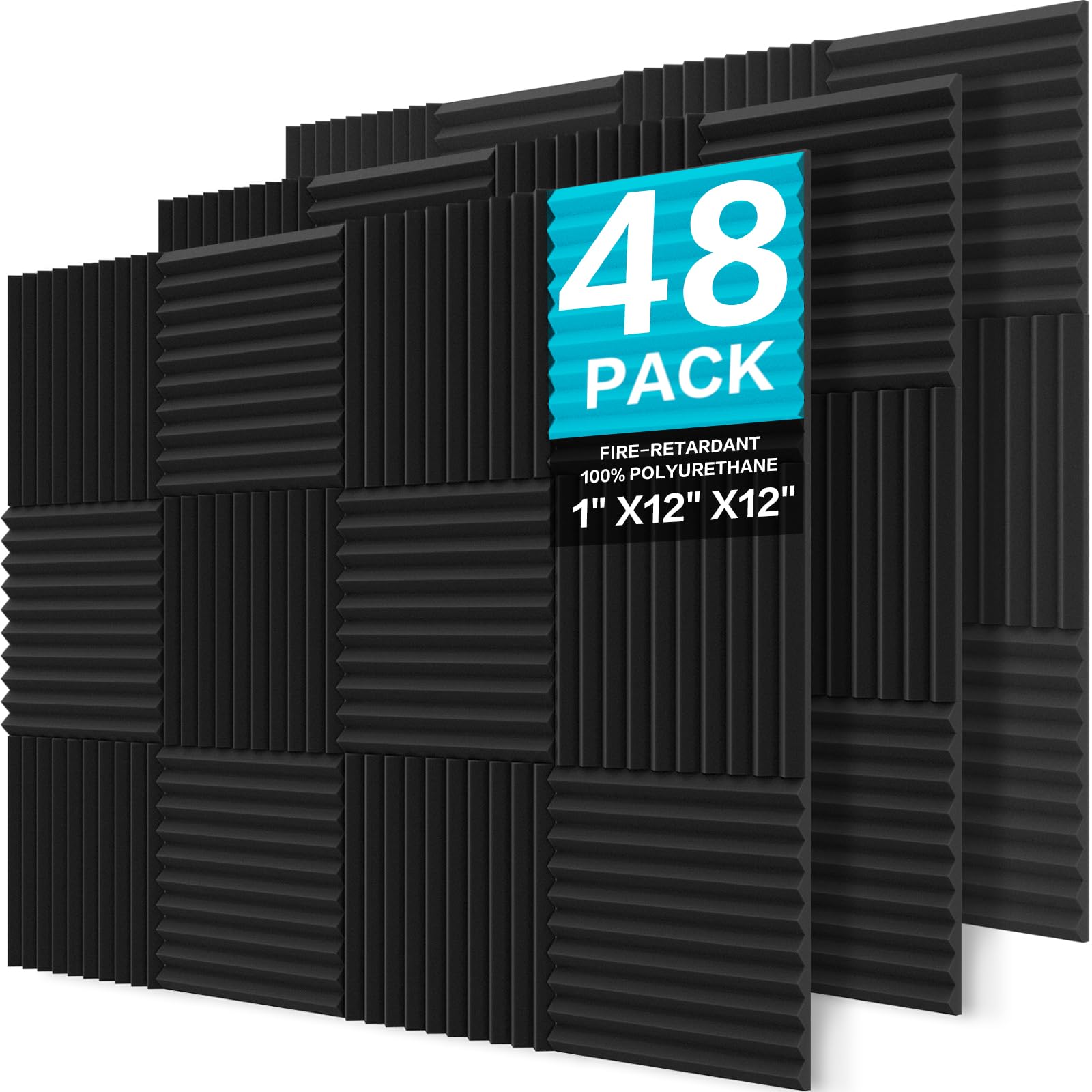
These foam panels work well for echo reduction in small spaces, though you’ll need to buy adhesive separately to mount them.
Pros
- Noticeably reduces echo and unwanted reflections in home offices and studios
- Covers a decent 4.5 square metres with the full pack at an affordable price point
- Easy to trim with a utility knife if you need custom sizing
Cons
- No adhesive included despite the product photos suggesting otherwise
- Takes time to air out the chemical smell after unpacking
- Only suitable for dampening echoes rather than blocking noise between rooms
We found these panels made a real difference when dealing with echo during video calls and recordings. The wedge design does what it’s supposed to do, absorbing those annoying sound reflections that make a room feel hollow. After mounting them on the upper half of our office wall, the space felt noticeably less echoey.
The foam arrives vacuum packed and needs a good airing out before installation. We left ours for a day or two to let the smell dissipate. The material feels lightweight but dense enough to handle sound absorption duties.
One frustration we encountered was needing to purchase mounting supplies separately. The listing doesn’t make this entirely clear upfront, so budget for double-sided tape or spray adhesive. We used 3M tape and found it held the panels securely.
These won’t stop your neighbour’s music coming through the wall or block sound between rooms. They’re designed for acoustic treatment, not soundproofing. If you’re after echo control for recording or video work, they’re effective. For actual sound blocking, you’ll need different materials entirely.
2. TONOR Acoustic Panels

These panels work well for dampening echoes and reducing room noise, though they won’t completely block sound transmission through walls.
Pros
- Installation takes less than an hour with the self-adhesive backing that sticks firmly to clean surfaces
- The 30cm square tiles are easy to cut and arrange in different patterns to suit your space
- They noticeably reduce echo and improve sound quality in recording spaces and game rooms
Cons
- The soundproofing effect is modest and won’t completely stop noise from travelling between rooms
- Size consistency varies slightly between panels, with some pieces differing by about 1mm
- The acoustic performance doesn’t match products designed specifically for blocking neighbour noise
We’ve used these panels in a home studio setup and found them surprisingly effective at controlling room acoustics. The self-adhesive backing made installation straightforward, though we recommend using a roller to ensure proper adhesion. Each panel stuck firmly to our painted plasterboard wall without needing extra glue.
The white polyester finish looks clean and modern once installed. We arranged them in a checkerboard pattern, which took about an hour for a medium-sized wall. Cutting them with a sharp Stanley knife was simple when we needed to fit awkward corners.
In terms of performance, these panels excel at reducing echo rather than blocking sound transfer. Our recordings showed a clear reduction in room reverb, making vocals sound much cleaner. However, they didn’t significantly reduce noise coming through the wall from adjacent rooms.
The 0.9cm thickness provides decent absorption for the price point. We noticed the biggest improvement in the mid to high frequency range, whilst lower frequencies still came through. For podcasting or gaming, they’ve made a real difference to audio quality.
3. HERTBER 24 Pack Acoustic Foam Panels

These panels offer decent echo reduction for home use at a reasonable price, though the adhesive can be hit or miss depending on your wall surface.
Pros
- The 2-inch thickness and pyramid design genuinely help absorb unwanted echoes in smaller rooms
- Installation takes minutes when the adhesive works properly on clean surfaces
- Panels bounce back to full shape quickly after unpacking from vacuum seal
Cons
- Adhesive quality varies significantly, with some panels losing grip within hours
- Sound reduction isn’t powerful enough for serious studio work or blocking external noise
- The foam feels lighter and less substantial than professional-grade alternatives
We tested these panels in a home office setup where video calls were producing noticeable echo. The difference was immediately apparent after covering about 30% of one wall. The pyramid texture does what it promises for mid to high frequency sound waves bouncing around the room.
Getting them up was straightforward on our painted plasterboard walls. We made sure the surface was spotless and dry before peeling off the backing. About 80% stayed put without issues, but a handful started drooping after a day or two.
The 24-pack gives decent coverage for a small to medium room. Each panel measures 12 by 12 inches, so we could experiment with different layouts. The black colour looks reasonably smart, though they won’t win any interior design awards.
We wouldn’t recommend these for blocking noise from neighbours or busy streets. They work on echo and reverberation inside a room, not stopping sound from passing through walls. For a home podcasting setup or gaming room where you want to reduce that boxy sound, they do the job adequately.
The price sits in the budget category, and the performance matches that positioning. We’ve used them successfully in a spare bedroom converted to a recording space for voiceover work, though we had to supplement the adhesive with a few small command strips on panels that wouldn’t stick.
4. TONOR Acoustic Panels

These panels work well for reducing echoes in small rooms, though they won’t completely block sound from neighbours.
Pros
- Self-adhesive backing makes installation straightforward without needing extra glue or tools
- Decent value with 18 panels included for covering a reasonable wall area
- Noticeably reduces echo and improves sound quality in home studios and bedrooms
Cons
- Soundproofing performance is limited and won’t stop loud noises passing through walls
- Panel sizes can vary slightly between pieces, making precise alignment tricky
- The 0.9cm thickness means they’re better for echo control than actual noise blocking
We found these panels incredibly easy to stick up on our office wall. The adhesive backing grips firmly to smooth surfaces, and we had the entire set installed within an hour. Just make sure your wall is clean and dust-free before applying them.
The acoustic improvement was immediately noticeable for reducing room echo. Our video calls sound much clearer now, and there’s far less reverb when speaking. However, we could still hear our neighbours through the wall, so don’t expect miracles for blocking external noise.
The grey finish looks smart and professional once mounted. We appreciated being able to cut them with a Stanley knife to fit around light switches and corners. The minimalist design blends well with most interior styles without looking too industrial.
For the price, these panels deliver solid performance for echo reduction. They’re ideal for home recording setups, games rooms, or anywhere you want to dampen sound reflections. Just remember they’re absorbing panels rather than true soundproofing barriers.
5. Fstop Labs Acoustic Foam 12 Pack

These budget-friendly foam panels offer basic sound absorption for small spaces, though they won’t block noise from neighbours.
Pros
- Easy to cut and shape for custom layouts without losing performance
- Arrives compressed but expands to full thickness within 24-48 hours
- Lightweight at 430g, making installation straightforward with adhesive
Cons
- Only 1 inch thick, so sound absorption is quite limited compared to thicker options
- Adhesive struggles to keep panels attached to ceilings long-term
- Won’t stop sound transmission through walls, only reduces echo and reverb
We installed these panels in a small home office and noticed they do help with echo reduction. The wedge pattern breaks up sound reflections nicely, though we had to be patient waiting for them to expand fully after unpacking. About a quarter of our panels needed the wash and dry method to reach their proper thickness.
The foam feels decent quality for the price point, but we quickly realised these are purely for acoustic treatment rather than actual soundproofing. They absorb sound within a room but do nothing to stop noise travelling through walls to adjacent spaces. This is fine for reducing reverb in a recording setup but disappointing if you’re hoping to achieve proper noise isolation.
Cutting them to size worked well with a sharp craft knife, though scissors struggled with the material. We used spray adhesive for wall mounting, which held up fine, but the ceiling panels started drooping after a few weeks. The black wedge design looks professional once installed, but we’d recommend using stronger fixings if you’re planning overhead placement.
Buying Guide
When we’re selecting acoustic insulation for our walls, we need to consider several key factors that affect performance and value.
Material Type and Density
The density of insulation material directly impacts its sound-blocking ability. We should look for products with a density rating between 40-100 kg/m³ for optimal acoustic performance.
Different materials offer varying levels of sound reduction:
| Material Type | Best For | Typical Thickness |
|---|---|---|
| Mineral wool | Airborne and impact noise | 50-100mm |
| Acoustic foam | High-frequency sounds | 25-50mm |
| Mass-loaded vinyl | Low-frequency sounds | 2-5mm |
| Fibreglass | General purpose insulation | 50-100mm |
Sound Reduction Performance
We must check the Sound Reduction Index (SRI) or Sound Transmission Class (STC) rating. Higher numbers indicate better sound blocking. Look for materials with ratings above 45 dB for effective noise reduction.
Installation Requirements
Consider whether we need professional installation or if the product is suitable for DIY fitting. Some materials require specialist tools or skills, whilst others come with simple installation systems.
Fire Safety Standards
All acoustic insulation must meet UK Building Regulations. Check for proper fire rating classifications, particularly Euroclass ratings or BS standards.
Moisture Resistance
For external walls or damp-prone areas, we should choose materials with water-resistant properties to prevent degradation over time.
Thickness and Space
Measure available wall cavity depth before purchasing. Thicker insulation generally performs better but requires adequate space for proper fitting.